How often should red light therapy be used? Instructions
Use a red light lamp 3 to 5 times per week, with sessions lasting 10 to 20 minutes. Start slowly with 2 to 3 times per week and build up. Using it more often or for longer does not produce additional results; for acute complaints such as muscle soreness, daily use may be beneficial temporarily. Below, you’ll learn how to calculate your ideal treatment time based on the strength of your lamp and the distance from your skin.
Red light therapy is rapidly gaining popularity, and for good reason. From skin improvement to muscle recovery, the applications are endless.
But how often should you actually use a red light lamp? And how do you know if you’re doing it correctly? In this blog, we explore the ideal frequency and treatment time, and provide helpful tips to get the most out of your sessions.
Attention! The text below is not medical advice. This text is based on our own knowledge, customer experiences, and various online sources.
On this page

60-day home trialFree shipping7 years of experience in light therapy
What is red light therapy? How it works & benefits
Red Light Therapy, also known as low-level light therapy or photobiomodulation, is an innovative treatment method that uses red and near-Infrared light.
This type of light penetrates deeply into the skin and stimulates cellular processes without heating or damaging the skin. The therapy is used for a wide range of purposes, from skin rejuvenation and wound healing to muscle recovery and pain relief.
How does it work?
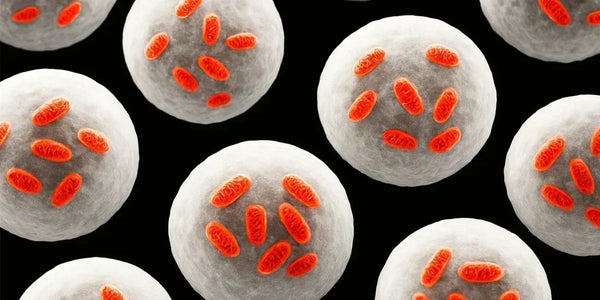
When your skin cells are exposed to red or Infrared light, the mitochondria, the energy factories of your cells, respond with increased ATP production (energy). This stimulates cell repair, reduces inflammation, and improves circulation.
Depending on the wavelength (usually between 630 and 850 nm), the light penetrates to different depths:
- Red light (630-660 nm): more suitable for superficial applications such as skin improvement.
- Near-Infrared light (810-850 nm): reaches deeper tissues, such as muscles and joints.
Want to learn more? Read our “How does RLT work?” page.
What are the benefits?
- Reduction of fine lines and wrinkles
- Faster recovery of muscles and joints
- Relief from chronic pain
- Improved sleep quality
- Addressing skin problems such as acne, eczema, or scars
- Support for wound healing
Please note: the effect varies from person to person. Your skin type, age, and health play a role in this.
View all red light therapy lamps

How often can you use a red light lamp?
Perhaps the most frequently asked question: How often is too often? The recommended frequency depends on your goal, the type of device, and your personal response to the therapy. In general:
- Start slowly: 2 to 3 times per week
- Build up: to 4 to 6 times per week
-
Session duration: 10 to 20 minutes per session
For some acute situations, such as minor wounds or muscle pain, daily use may be temporarily effective. However, pay close attention to signals from your body, such as redness or sensitivity. Listen to your skin.
Tip: Doing more does not automatically mean better results. Balance is key.
Calculate your ideal treatment time
Every skin type and device is different. That is why it is wise not to guess, but to calculate. The optimal treatment duration depends on three things:
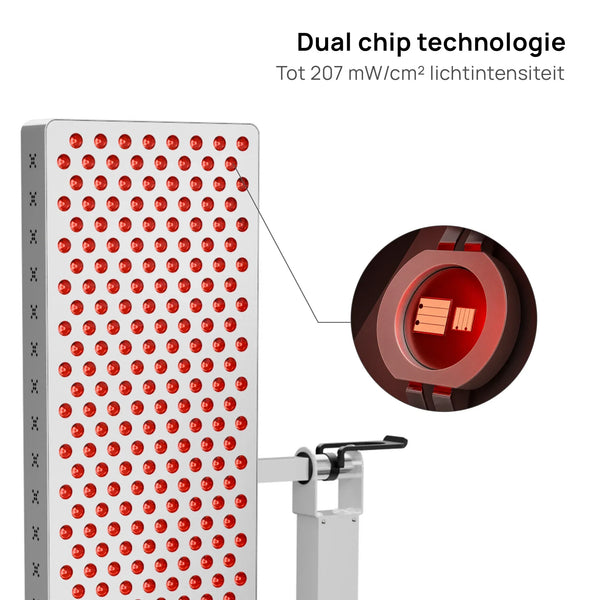
- Light intensity of your device (in mW/cm²)
- Desired dose (in J/cm²)
- Distance from the skin
The formula
Treatment time (seconds) = (J/cm² × 1000) ÷ mW/cm²
Example: Suppose you want to receive a dose of 10 J/cm² with a device that delivers 37 mW/cm² at a distance of 30 cm. Then you calculate:
10 × 1000 / 37 ≈ 270 seconds (or 4.5 minutes)
Please note: many devices provide an excessively high light intensity, especially when measured with a solar power meter. Always check whether the measurement was taken with professional measuring equipment.
More is not always better
Red light therapy follows the biphasic dose-response relationship:
- A dose that is too low is ineffective
- A dose that is too high can even be counterproductive
The key is finding that “sweet spot” where your body responds optimally. Scientist Michael R. Hamblin emphasizes this time and again: sometimes less really is more.

Risks and precautions
Although red light therapy is generally safe, there are a few things to keep in mind:
- Always wear suitable protective glasses during facial treatments, unless you are certain that your device is safe for direct exposure.
- Keep the distance consistent, as indicated in the manual for your LED lamps.
- Do not use the device on damaged or burned skin, unless specifically recommended.
- Consult a doctor if you have medical conditions or take medication that increases photosensitivity (such as certain antibiotics).
Important terms, clearly explained
Below you will find a number of terms you often encounter in red light therapy:
- J/cm² (joules per cm²): the amount of energy delivered to a specific skin area.
- mW/cm² (milliwatts per cm²): the light intensity, or how much power your device delivers to the skin.
- Treatment time: how long you direct the light at your skin to achieve the desired dose.
- Biphasic dose-response: the effect in which both too little and too much light produce less results than the correct, optimal dose.
-
Solar power meter: a measuring instrument that is often inaccurate for red light therapy and leads to overestimated values.

Combination with other treatments
Red light works well on its own, but can be even more powerful in combination with other treatments. After a session, your skin often absorbs skincare products such as serums or creams better, so it is best to apply them immediately afterward.
Red light is also a valuable complement to physiotherapy or muscle recovery. Add healthy habits such as getting enough exercise, drinking water, and eating well, and you will enhance the effect of your entire routine without any hassle.
Conclusion
Red Light Therapy is a powerful and natural way to support your health and appearance. The key to success? Not simply “more and longer,” but using it in a targeted and balanced way. By properly aligning your goal, skin type, and your device's technical specifications, you can get the most out of your sessions.
Use your red light lamp ideally 3 to 5 times per week, with sessions lasting between 10 and 20 minutes. Calculate your ideal treatment time using the formula we shared above.
Want to try it yourself? View Liroma's red light panels. You have 60 days to test at home whether it's right for you.
View the panels