Infrared therapy for horses: how it works, benefits, and use
After a long ride, your horse remains stiff in the back, especially on cold mornings. Infrared radiation is converted into heat in the tissue, causing the blood vessels to dilate, increasing circulation, and relaxing tense muscles. In horses, it is used to relax muscles, provide greater comfort with stiffness and joint problems, and promote faster recovery after exertion. As a general guideline, keep the lamp 20 to 50 cm away and allow 10 to 20 minutes per zone, 3 to 5 times a week for preventive use. Below, you will learn how it works, when to use it, and what to watch out for.
Your horse is stiff after strenuous training, has tense muscles, or is recovering slowly from an injury. An infrared lamp with heat can then be a simple and effective addition to regular care.
The warmth penetrates deep into muscle and joint tissue, improves circulation, and helps the body relax and recover more quickly. In this article, you will learn how infrared therapy works, what it can do for your horse, and how to use it safely.
Please note! This information is based on available scientific sources and general knowledge about light therapy. It is not veterinary or medical advice. Always consult a veterinarian if your horse has health problems.
60-day home trialFree shipping7 years of experience in light therapy
Please note: this information is based on scientific sources, customer experiences and our own knowledge of light therapy. It is not medical advice. If you take medication, have a medical condition or are unsure, talk to your doctor or a specialist first.
What is infrared therapy for horses?
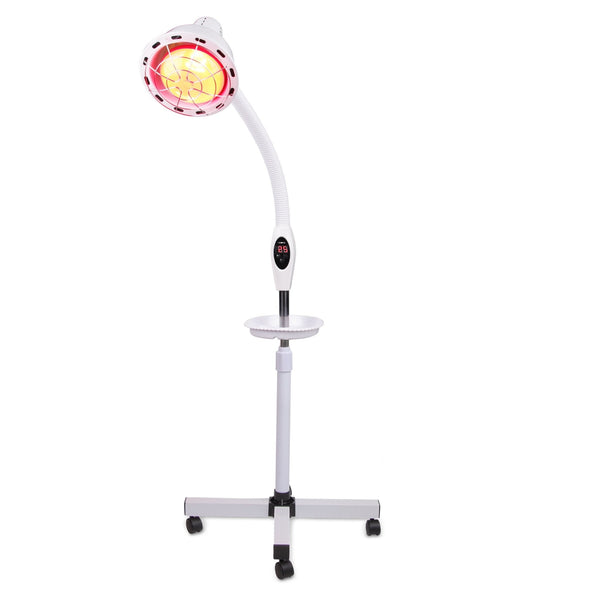
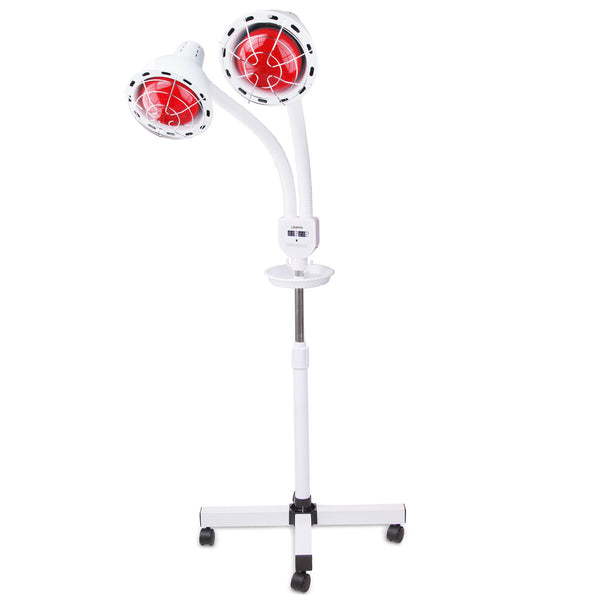
Infrared therapy uses infrared radiation, a form of electromagnetic radiation that falls just outside the visible light spectrum. You cannot see the light, but you can feel it as pleasant warmth that penetrates deep into the tissue. This warmth is at the heart of how it works.
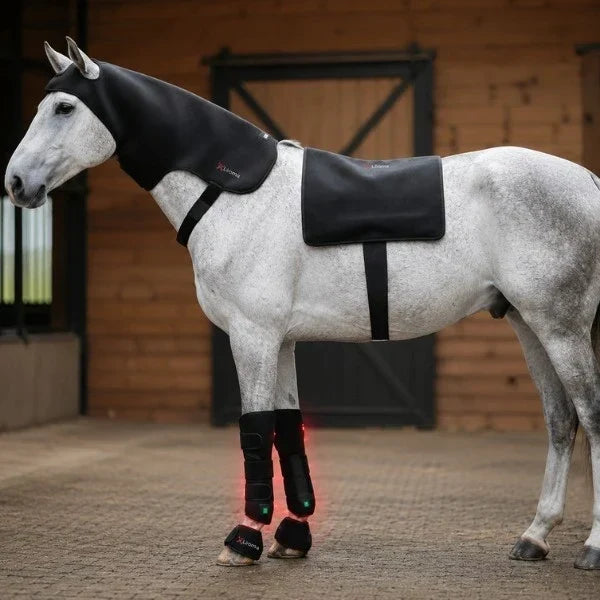
Infrared therapy has been used for some time with horses in professional sports and rehabilitation care. Physiotherapists, veterinarians, and trainers use it to relax muscles, stimulate circulation, and support recovery. Thanks to compact, user-friendly devices, it is now also easy to use from the stable.

There are several types of Infrared light:
- Near-infrared (NIR, 700-1.400 nm) penetrates deeply into muscles, tendons, and joints.
- Mid-infrared and far-infrared work more on the skin's surface and produce stronger heat.
Most therapeutic infrared lamps for horses use near-infrared or a combination of wavelengths for maximum depth of action.
How does it work?
When infrared radiation reaches the tissue, the energy is converted into heat. This heat has a direct physiological effect: blood vessels dilate, circulation increases, and muscles relax. Increased circulation means more oxygen and nutrients for the tissue, and faster removal of waste products such as lactic acid.
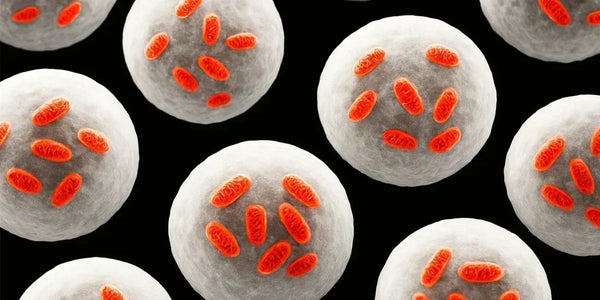
Near-infrared light also has an effect at the cellular level, comparable to the principle of red light therapy. It activates the mitochondria, the cell's energy factories, enabling the cell to produce more energy and supporting recovery processes. This makes near-infrared more effective for deeper therapeutic applications than a heat lamp alone.
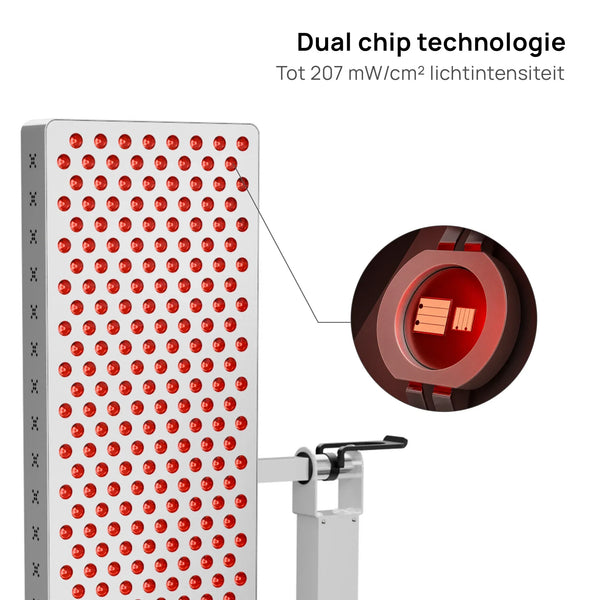
The difference from an ordinary heat lamp is subtle but relevant: a standard heat lamp emits broad-spectrum heat radiation, while a therapeutic Infrared lamp uses targeted wavelengths that penetrate deeper into the tissue with less discomfort from heat at the surface.

What are the benefits?
Muscle relaxation and reduced tension
This is the most direct application of Infrared therapy. The heat penetrates into the muscle fibers and helps relax tense or overworked muscles. Especially after intense training or competition, horses experience the heat as pleasant and relaxing. Stiffness decreases and the horse moves more smoothly.
A preliminary study by Harrison (2024) published in the Open Journal of Veterinary Medicine examined the effects of far-infrared treatment before exercise in three horses and measured an 86% improvement in muscle balance and muscle strength symmetry after treatment, compared with 56% without treatment. This is a small case study, but the findings support the use of infrared as a warm-up to prevent warm-up-related injuries in sport horses.
Improved blood circulation
Infrared heat causes vasodilation: the blood vessels widen, causing blood flow to increase. Improved blood circulation means that muscles and joints receive more oxygen and nutrients, and waste products are removed more quickly.
This speeds up recovery after exertion and supports overall tissue blood circulation, including in areas with naturally limited blood flow such as tendons.
Pain relief
The combination of heat, improved blood circulation, and muscle relaxation provides pain relief. Horses with chronic stiffness, joint complaints, or muscle soreness often respond well to regular infrared treatments. The pain relief is immediately noticeable but temporary; for structural complaints, infrared therapy is a supplement to veterinary care, not a replacement.
Faster recovery after exertion
Improved blood circulation and muscle relaxation help tissue recover more quickly after heavy exertion. Infrared light is therefore regularly used as part of the cool-down routine after training or competition. Sport horses in particular benefit from a shorter recovery time between training sessions.
Support for joint complaints
For older horses or horses with osteoarthritis, infrared heat can reduce stiffness and improve mobility. The warmth relaxes the surrounding muscles and improves blood circulation around the joint. It is not a treatment for the underlying condition, but it can noticeably improve everyday comfort.
Relaxation and stress reduction
Many owners notice that their horse is calmer and more relaxed after a treatment. The pleasant warmth has a calming effect, similar to a massage. Especially for horses that are sensitive to stress, for example due to transport, changing environments, or competitions, infrared therapy can help them calm down more quickly.

What complaints can you use it for?
Infrared therapy is widely applicable, both preventively and for specific complaints:
- Muscle tension and stiffness after training, competition, or standing still for extended periods
- Joint complaints such as osteoarthritis or stiffness, for everyday comfort
- Kissing spines to support relaxation in the back
- Tendon and ligament complaints to improve blood circulation during the recovery process
- Muscle soreness after overexertion or unusual training
- Stress and tension after transport, competitions or new environments
- Preventive use as a warm-up before training or as a regular recovery routine
Would you like to view the scientific evidence for each complaint? View Liroma's research page.
Infrared lamp or red light lamp?
The terms infrared and red light therapy are often used interchangeably, but they are two different methods. Both work with light in the infrared spectrum, but their purpose and mechanism are not the same. The overview below makes the difference clear.
| Infrared heat lamp | Red Light Therapy | |
|---|---|---|
| How it works | Heats tissue through thermal radiation | Stimulates cells through light (photobiomodulation) |
| Depth | Superficial to a few centimeters | Deep into muscles, tendons and joints |
| Effect after use | Immediate relaxation, disappears with the heat | Builds over time with regular use |
| Purpose | Muscle relaxation, circulation, comfort | Cell recovery, anti-inflammatory, regular use |
| Heat | High, noticeably warm | Minimal, comfortable |
| When to use it | Before/after training, relaxation, stiffness | Recovery, injuries, chronic complaints |
In short: an infrared lamp with heat provides direct warmth and relaxation, particularly for muscles and joints. Red Light Therapy works through cell activation and is focused on structural recovery from within. The two complement each other well: infrared for comfort and immediate relief, red light for deeper recovery.
Read more about red light therapy for horses.

How do you use it in practice?
Preparation
Make sure the area being treated is clean and dry. A dirty or wet coat limits heat penetration. Introduce the horse to the device calmly, especially the first few times. Most horses quickly get used to the pleasant warmth.
Distance and session duration
Generally keep the lamp 20 to 50 cm away from the area being treated. A session lasts an average of 10 to 20 minutes per area. The exact distance and duration depend on the device and its power; always check the manual. Start with shorter sessions and gradually build up
Most commonly treated areas in horses
- Back and lower back
- Shoulders, throat and neck
- Tendons and joints of the lower legs
- Each specific problem area based on the complaint
When to use it
- Before training: as a warm-up to warm up the muscles and make them more supple
- After training: as a cool-down to relieve muscle tension and promote recovery
- After transport: to help the horse relax after a stressful journey
- For stiffness or pain: as a supplement to daily care
What should you pay attention to?
- Eyes: never point the lamp directly at the eyes; keep the lamp away from the face or cover the eyes
- Fever: do not use infrared therapy in cases of fever or acute inflammation, as heat can make this worse
- Open wounds: do not treat open, actively bleeding wounds without consulting a veterinarian
- Young foals: be careful around the growth plates of horses that are still growing
- Overheating: always keep the lamp moving or at a sufficient distance to prevent burns
Not sure? Consult your veterinarian first, especially if there is a serious complaint.

Sport horse, recreational horse, or rehabilitation?
Sport horses
Dressage horses, show jumpers, and eventers are subjected to intensive workloads. Infrared therapy fits well into the daily routine: before training as a warm-up, and afterward as a cool-down. Regular use keeps muscles supple, reduces the risk of overuse injuries, and shortens recovery time between training sessions.
The aforementioned study by Harrison (2024) shows that infrared treatment before exercise measurably improves muscle balance and muscle strength symmetry, making the warm-up more effective and potentially reducing the risk of injuries.
Recreational horses and older horses
Recreational horses and older boarding horses also benefit from Infrared therapy. For older horses that more often suffer from stiffness, arthritis, or poor circulation, regular heat treatment can noticeably improve daily comfort. Simple, painless, and easy to apply in the horse's own stable.
Horses in rehabilitation
Is the horse recovering from an injury or surgery? An infrared panel can then help maintain circulation during a period of restricted movement, relieve muscle tension, and support the recovery process. Always plan this in consultation with your veterinarian or equine physiotherapist, especially during the acute phase of an injury.
Frequently asked questions
Want to try it yourself? View Liroma's range. You have 60 days to test it at home and see if it's right for you.
View all products