Is red light therapy proven to be effective?
For some applications, the evidence is strong. There are more than five thousand peer-reviewed studies on photobiomodulation, with measured results for skin texture and collagen density, muscle recovery, inflammation reduction, and pain relief. However, these studies use equipment that delivers specific wavelengths and sufficient irradiance, and the effects only appear with consistent use over several weeks. Below, you will read what has been studied for each application and where the limitations lie.
It is a logical question. Red light therapy sounds almost too good to be true. Just sit in front of a lamp and help your skin, muscles, and joints recover faster?
But the science here is clearer than for most wellness trends. There are now thousands of published studies on photobiomodulation, more than five thousand of which are peer-reviewed. That is not a small beginning.
60-day home trialFree shipping7 years of experience in light therapy
Please note: this information is based on scientific sources, customer experiences and our own knowledge of light therapy. It is not medical advice. If you take medication, have a medical condition or are unsure, talk to your doctor or a specialist first.
How does it work?
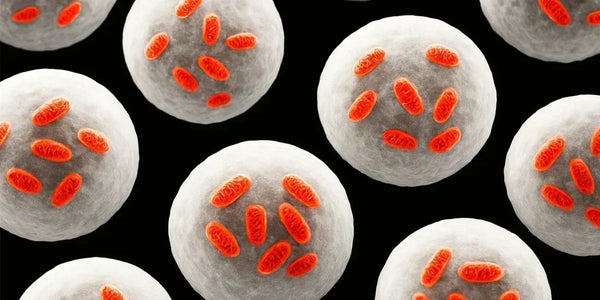
Red light therapy works through photobiomodulation: light in the red and near-infrared spectrum is absorbed by mitochondria in your cells, which then produce more ATP. ATP is the energy source for virtually all cellular processes, from skin repair to muscle recovery and inflammation reduction. This mechanism is not controversial. It is well understood and widely replicated in the scientific literature.

Skin and anti-aging
One of the best-studied applications is skin improvement. In a prospective, randomized, controlled study of 136 participants, published in Photomedicine and Laser Surgery, a significant improvement was measured after 30 sessions in skin texture, fine lines, and intradermal collagen density, measured by ultrasound. The results applied to both red light (611 to 650 nm) and a broader polychromatic spectrum. Wunsch & Matuschka, PMC 2014
Muscle recovery and athletic performance
Near-infrared light at 810 to 850 nm penetrates into muscle tissue. Multiple controlled studies show that use before or after training reduces muscle damage, speeds up recovery, and decreases delayed-onset muscle soreness (DOMS). A review of studies on photobiomodulation and muscle tissue, published on PubMed, confirms that both pre- and post-training application have demonstrable effects on fatigue resistance and muscle damage. Leal-Junior et al., PubMed 2016

Inflammation reduction and joint pain
Red light therapy has a well-documented anti-inflammatory effect. It inhibits pro-inflammatory cytokines and stimulates repair processes in damaged tissue. An extensive review published on PMC shows that photobiomodulation is effective for pain relief in conditions such as knee osteoarthritis, chronic back pain, rheumatoid arthritis, and carpal tunnel syndrome. Hamblin, PMC 2019
For people with rheumatic conditions, there is additional evidence that photobiomodulation reduces inflammatory markers and inhibits synovial inflammation, including in rheumatoid arthritis. Review of photobiomodulation for arthritis, PMC 2023
Pain relief
The FDA has approved light therapy for the treatment of joint pain. Multiple clinical studies confirm that red light therapy reduces pain, both acute and chronic, without the side effects of medication. The anti-inflammatory action of photobiomodulation has been described in an extensive mechanistic review on PMC. Hamblin, PMC 2017

But does it always work?
No. And that is important to say.
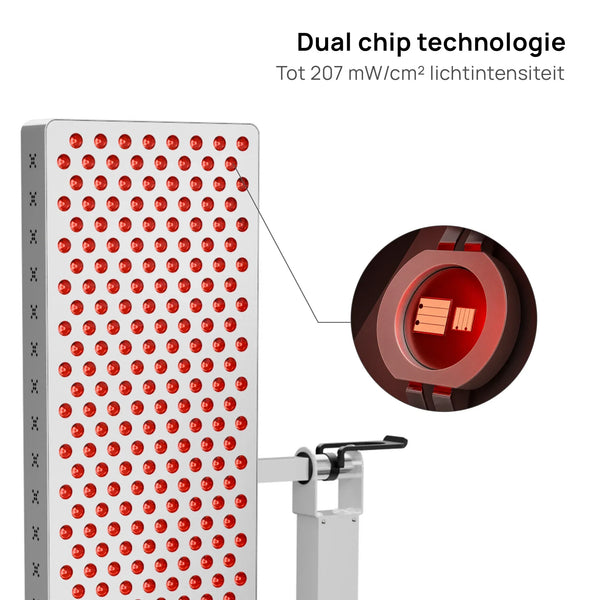
The scientific evidence is strong, but it also has limitations. Many studies were conducted using professional equipment that delivers specific wavelengths and irradiance levels. An inexpensive panel with unclear specifications will not reproduce those results.
Red light therapy works. But only if the device delivers the right wavelengths, achieves sufficient irradiance at the correct distance, and is used consistently over several weeks.
Conclusion
Red light therapy is one of the best-studied non-invasive therapies currently available. The evidence for skin improvement, muscle recovery, inflammation reduction, and pain relief is robust. The question is not whether it works, but whether your device has the specifications needed to actually reproduce the results from the studies.
Want to try it yourself? Check out Liroma's red light panels. You have 60 days to test at home whether it suits you.
View the panels