Light therapy and collagen: what red light does to your skin
A photo from five years ago and one from today, and the main difference is in your skin. Collagen is the protein that keeps your skin firm. From your twenties onward, the collagen in your skin gradually declines, and that goes faster around menopause. You see the result in the mirror: fine lines, skin that bounces back less, a less even complexion. Below you can read what red light can do for the collagen in your skin.
Red light therapy is often mentioned as a way to support that collagen production. Here is what is and is not true about it.
60-day home trialFree shipping7 years of experience in light therapy
Please note: this information is based on scientific sources, customer experiences and our own knowledge of light therapy. It is not medical advice. If you take medication, have a medical condition or are unsure, talk to your doctor or a specialist first.
What collagen does, and why it declines
Collagen sits in the dermis, the layer beneath your epidermis, together with elastin and hyaluronic acid. Together they form the supporting tissue: collagen provides firmness, elastin provides resilience.
The cells that make collagen are called fibroblasts. As you get older, they become slower and produce less. On top of that, UV radiation, smoking and lack of sleep speed up the breakdown process.
You cannot put collagen back by applying it. A collagen molecule is too large to pass through the skin barrier; what you put in a cream stays on the surface. What you can do is stimulate the fibroblasts themselves to produce more.
How red light comes into it
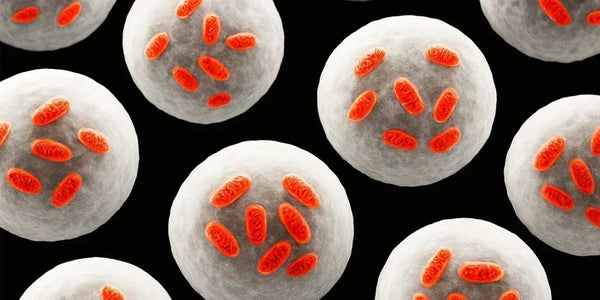
Red light around 630 to 670 nanometers is absorbed in the upper layers of the skin. There it reaches cytochrome c oxidase, an enzyme in the mitochondria of your cells. That is the engine of the cell.
What follows has been described by Michael Hamblin in his overview of the mechanisms of action: more ATP, a brief peak in oxygen radicals that acts as a signal, and a shift in nitric oxide. A fibroblast with more available energy can do more work, and that work includes producing collagen.
That is the mechanism. It is important to add that a mechanism is not the same as a proven result for everyone. What we do know is that the effect is gradual and that consistency makes the difference.

Which wavelengths you need
For the skin it is the red part of the spectrum that matters:
- 630 nm: works superficially to moderately deep in the skin layers. Often used for skin quality and calming redness.
- 650 nm: lies right next to it and supports the skin barrier and the connective tissue.
- 660 nm: the best-researched wavelength for skin repair and circulation.
- 670 nm: penetrates slightly deeper and supports cellular energy in the skin.
The wavelengths from 810 to 1060 nm fall within what the ICNIRP calls IR-A, 780 to 1400 nm, and that band penetrates a few millimeters into the tissue. For muscles and joints that is the relevant group; for the skin you mainly need the red part. Which wavelength is for what is set out in the wavelength overview.
More light is not more collagen
This is where many people go wrong. The dose works biphasically: too little light does nothing, and above a certain point the effect decreases again. Twice as long under the lamp therefore does not give you twice as much, and it can even be counterproductive.
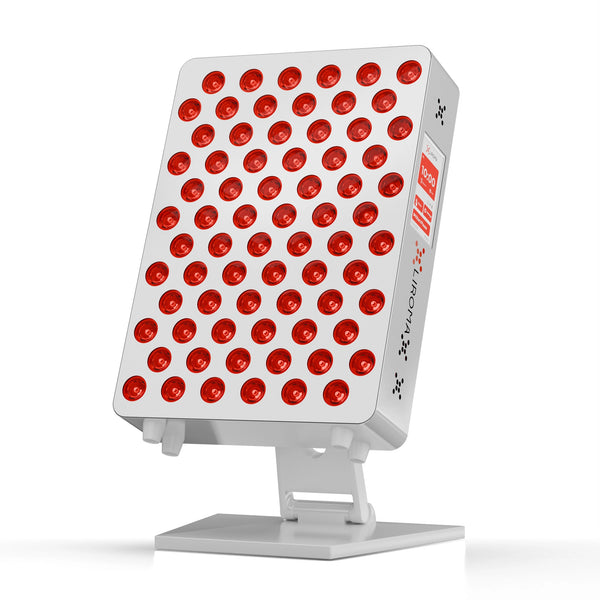
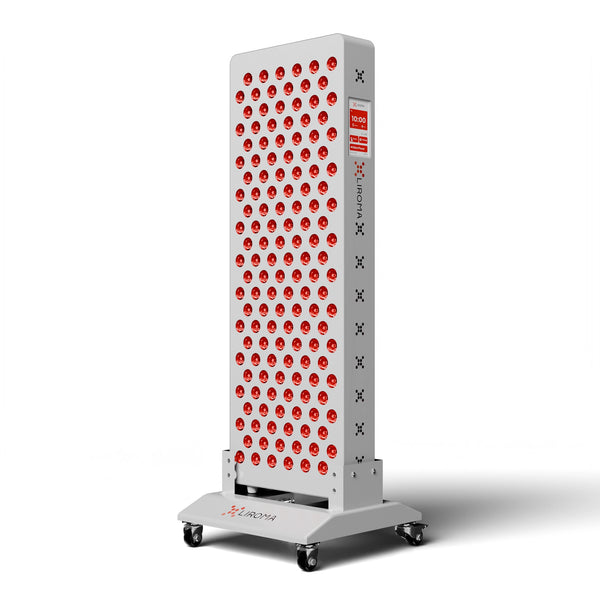
That is why the intensity of the PrimeFORCE Elite G5-300 measured by LightLab is on the certificates page. The other panels in the range have the same LEDs and the same control electronics. Without a figure like that, you do not know which treatment time belongs to your device.
What you can realistically expect
No result in week one. Building collagen is a slow process: your fibroblasts need weeks, not days.
In practice with skin applications, the first visible change usually comes somewhere between week four and week eight, and then it is about texture and evenness before it is about fine lines. Anyone who looks in the mirror after three weeks and sees nothing is simply too early.
What it is not: a replacement for sunscreen. UV remains by far the biggest cause of skin aging. Red light supports recovery; it does not protect against the damage.
Practical: how to go about it
- Frequency: three to five times a week. See how often you do it.
- Duration: ten to twenty minutes for the face.
- Clean, dry skin. Makeup and thick creams block the light. Apply your skincare afterwards.
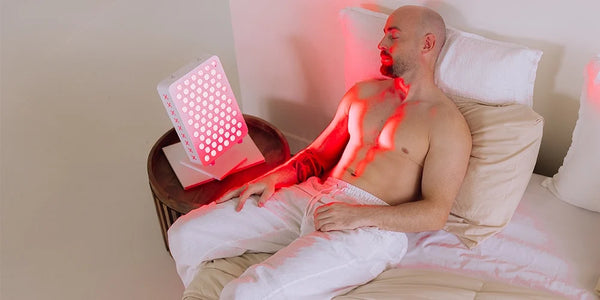
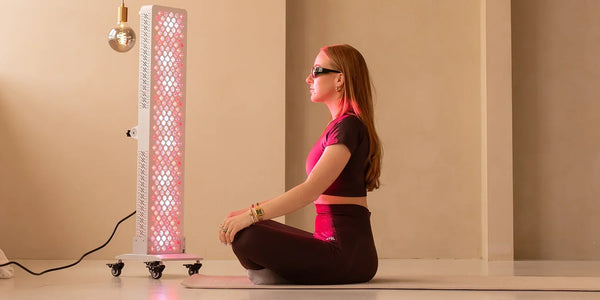
- Distance: thirty to fifty centimeters from a panel; a mask rests on the skin.
- Record your starting point. A photo in the same light, on day one. Without that photo you will be judging your memory in eight weeks, and not your skin.
Mask or panel?
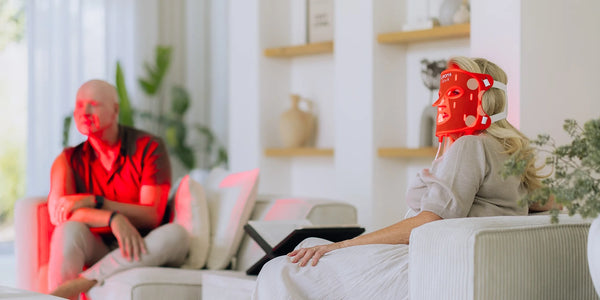
For the face only, an LED mask is more practical: it rests on your skin, your hands stay free and the distance is always the same. If you also want to treat your neck, décolletage or other parts of your body, a panel is more versatile.
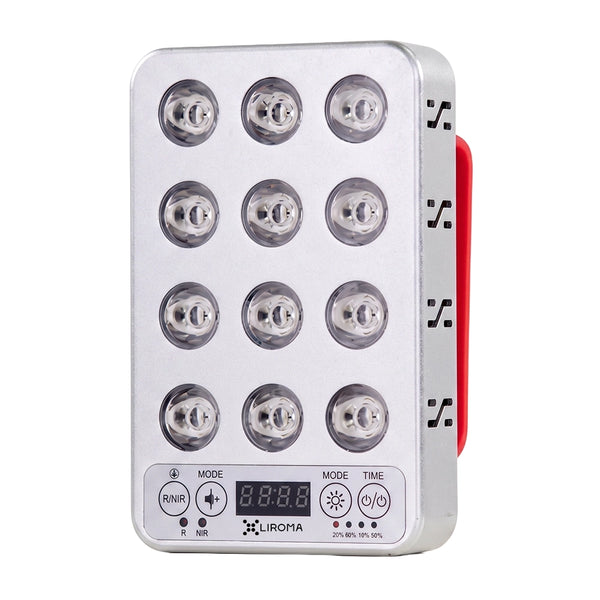
The light intensity of a mask is lower than that of a panel; the mask is therefore aimed at skin goals and not at deeper applications. You can read more about the differences in LED therapy for your face. Still unsure? Then use the buying guide.