Infrared and red light for rheumatism: what can you expect?
You have been diagnosed with rheumatism, but every story you read seems to be about something else. Rheumatism is not a single condition. It is a collective term for more than a hundred conditions affecting the joints, muscles, and tendons: from osteoarthritis to rheumatoid arthritis to fibromyalgia. What helps one person may do nothing for another. Below, you can read what infrared and red light can and cannot mean for rheumatism.
That makes this question harder to answer than most. Below is what heat and red light may contribute, by type of complaint, and where the limits lie.
60-day home trialFree shipping7 years of experience in light therapy
Please note: this information is based on scientific sources, customer experiences and our own knowledge of light therapy. It is not medical advice. If you take medication, have a medical condition or are unsure, talk to your doctor or a specialist first.
First: get it investigated
Red light therapy is supportive and does not provide a diagnosis. If you have persistent joint pain, morning stiffness lasting longer than an hour, or joints that become swollen and warm, the GP should be the first step.
Thuisarts.nl has clear pages about rheumatism in general, rheumatoid arthritis, and fibromyalgia. Read these first if you do not yet have a diagnosis.
Three types, three stories
Osteoarthritis: worn cartilage
The most common type. The cartilage becomes thinner, the ends of the bones move less smoothly against each other, and this causes pain and stiffness. Osteoarthritis cannot be cured — no treatment, including a lamp, can restore cartilage.
What can help: addressing the surrounding symptoms. With a knee, where the joint lies just beneath the skin, this is more promising than with a hip with centimeters of muscle in between. Read more about this in red light therapy for knee complaints. How people use a panel at home for red light therapy for osteoarthritis, including the distance and session duration for each joint, is explained on a separate page.
Rheumatoid arthritis: an inflammatory disease
Something different is happening here: the immune system attacks the lining of its own joints. This is a systemic condition treated with medication.
Be careful here. During an active inflammatory phase — when a joint is swollen, red, and warm — heat is generally discouraged; cooling is more appropriate. Consult your rheumatologist before using anything for this.
Fibromyalgia: pain without joint damage
Widespread pain, fatigue, and sleep problems, without demonstrable damage to the joints. People with fibromyalgia relatively often report benefiting from heat, probably mainly through relaxation and better sleep. We have two existing articles on this: red light therapy for fibromyalgia and infrared lamps for fibromyalgia.

Heat or light: the difference matters here
With rheumatism, these two are often confused, but they do different things.
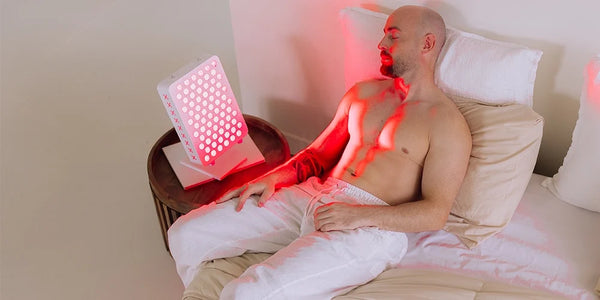
Infrared heat increases blood flow and relaxes muscles. This works well for morning stiffness and tense muscles around a painful joint. The effect is immediately noticeable and temporary.
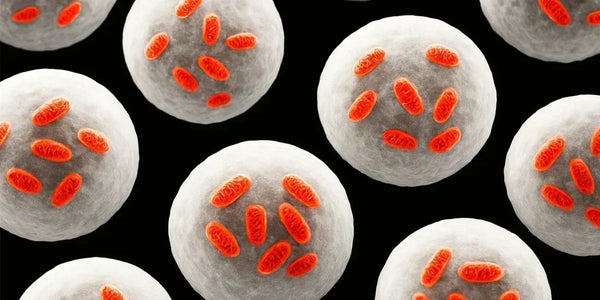
Red Light Therapy works without heat. According to the ICNIRP, near-infrared light from 810 to 1060 nm penetrates several millimeters into the tissue and is absorbed by the mitochondria; the mechanism has been described by Hamblin. You feel little from it, and the effect builds over weeks.
For an acutely stiff morning: heat. For something you can sustain for months: light. They are not mutually exclusive.
Practical guidance
- Frequency: four to five times per week. With rheumatism, consistency is everything — see how often to do it.
- Duration: eight to twelve minutes per joint, with a maximum of twenty.
- Distance: thirty to fifty centimeters. See the article about distance.
- Bare skin, and with round joints, treat multiple sides separately.
- Do not use it on an actively inflamed joint without consulting your doctor.
What you can realistically expect
No cure. No replacement for your medication — never stop taking it on your own initiative.
What people who benefit from it generally report: less morning stiffness and finding it easier to get moving. Allow six to eight weeks before you can say anything about this; see how long it takes to see results.
And some people notice nothing. That happens, which is why you can try it at home with us for sixty days.
Which device?
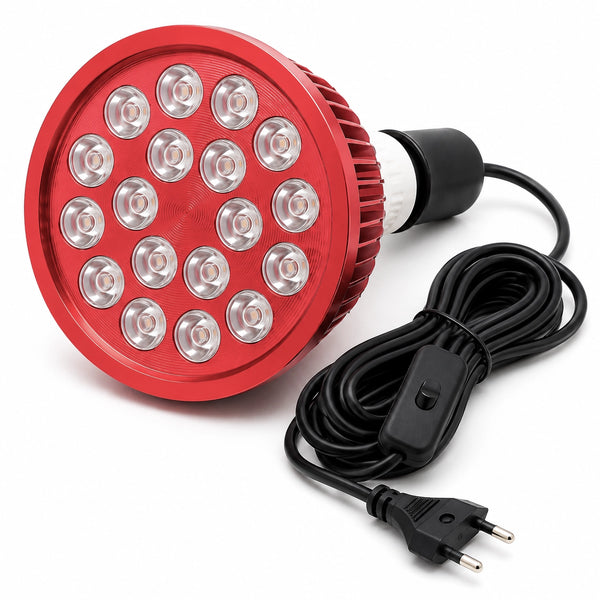
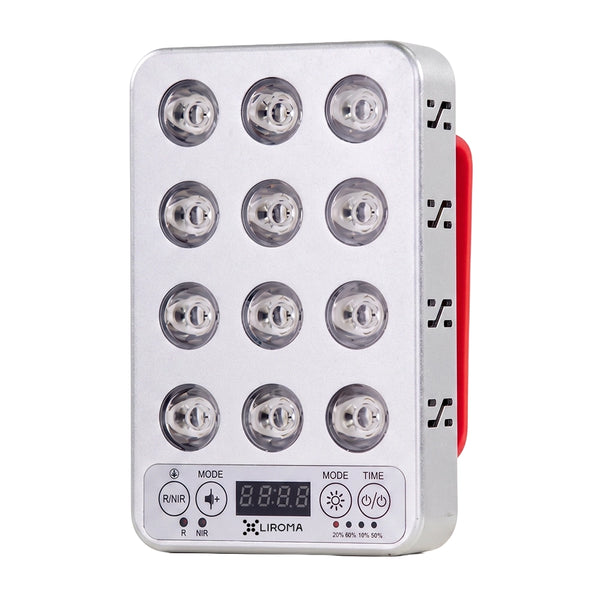
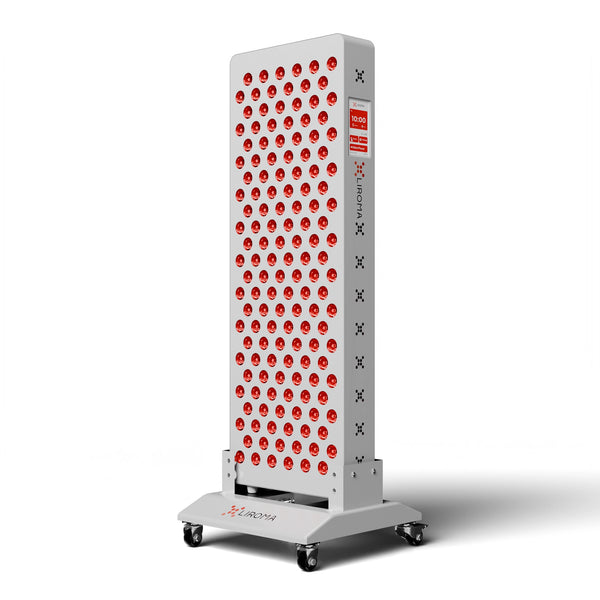
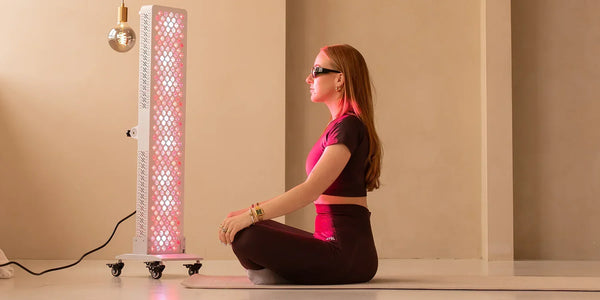
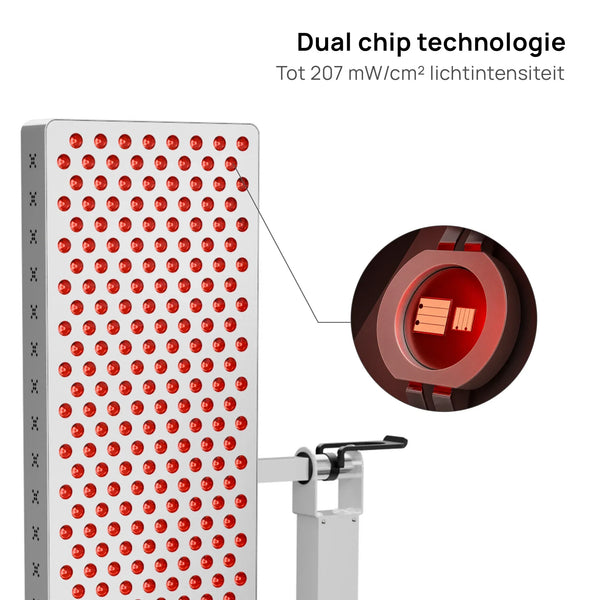
If the complaints are in one or two joints, a small, targeted device is the most practical option: the PrimeSpot or the Portable Prime. If multiple joints are involved, or your back and neck are affected as well, a panel makes more sense because you can treat larger areas in a single session.
If you mainly want heat for morning stiffness, take a look at the infrared heat lamps. Compare the models or use the selection guide.
Sources
- Thuisarts.nl — Rheumatism: symptoms and treatments
- Thuisarts.nl — Rheumatoid arthritis
- Thuisarts.nl — Fibromyalgia
- Thuisarts.nl — Osteoarthritis
- ICNIRP — Infrared radiation
- Hamblin, M. — Mechanisms and Mitochondrial Redox Signaling in Photobiomodulation
Red light therapy is intended to support the body's natural recovery and is not a medical device for curing conditions. Results vary from person to person. If you have a rheumatic condition, always consult your GP or rheumatologist, and never stop taking prescribed medication on your own initiative.