Red Light Therapy for psoriasis: what does the science say?
Scaly patches on your elbows that return after every course of ointment. The evidence is limited. Small studies with 9 to 20 participants show that red light can reduce skin scaling and thickening, but this is too little to call it a proven treatment. Medical UV light therapy in hospitals (UVB and PUVA) is well supported by evidence, and red light therapy does not replace it. Below, you can read what the research shows and how to apply it cautiously at home.
Red, scaly patches that just will not go away: psoriasis is estimated to affect 1.5 to 3 percent of people in Europe. More and more of them are wondering whether a red light lamp can relieve psoriasis. The short answer: red light therapy appears to be able to ease certain symptoms, but it is not a proven cure and is not a replacement for the medical light therapy that dermatologists have been using for years.
Below, you can read what the research shows, how it might work, and how to apply it safely at home.
Please note! This information is based on available scientific sources, customer experiences, and knowledge about light therapy. It is not medical advice. Psoriasis is a chronic autoimmune condition: always consult a general practitioner or dermatologist for diagnosis and treatment.

60-day home trialFree shipping7 years of experience in light therapy
What is psoriasis and how can you recognize it?
Psoriasis is a chronic autoimmune condition in which skin cell production occurs much faster than normal. Whereas a skin cell normally takes about a month to reach the surface, with psoriasis this happens within a few days.
The cells build up into the familiar red, thickened patches with silvery-white scales, often on the elbows, knees, scalp, and lower back.
Psoriasis is not a skin problem that you “catch” and follows an unpredictable course: periods with few symptoms alternate with flare-ups. Known triggers include stress, infections, skin damage, cold, and alcohol or tobacco use. The condition is not contagious, but its visibility and itchiness often also have a significant impact on daily life and self-confidence.
What is red light therapy (photobiomodulation)?
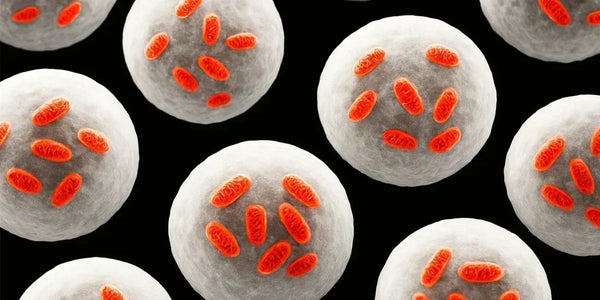
Red Light Therapy, also known as photobiomodulation (PBM), uses low-energy light in the red and near-infrared spectrum to stimulate cells. The light is absorbed by the mitochondria, the cell's powerhouses, causing them to produce more ATP. More cellular energy theoretically means greater capacity for repair and for reducing inflammatory responses.
Important to know: Red Light Therapy contains no UV radiation. This makes it fundamentally different from the UV light therapy that dermatologists use in hospitals to treat psoriasis and compare further down in this blog.

Does Red Light Therapy work for psoriasis? This is what the research says
This is the most important question, and we want to be honest about it: the evidence for Red Light Therapy specifically for psoriasis is still limited. There are indications that it may help, but it is not a broadly established treatment like medical UV light therapy.
What medical light therapy (UVB/PUVA) already shows
In Dutch hospitals, psoriasis has been treated for decades with controlled UV light therapy (UVB or PUVA), under the supervision of a dermatologist. According to the medical guideline, the lesions decrease in about 75 out of 100 people with UVB light and disappear in about 82 out of 100 people who receive PUVA therapy.
That is solid evidence, built on years of clinical experience. However, this involves UV radiation at a high, controlled dose under medical supervision, with risks such as burns and, in the long term, an increased risk of skin aging and skin cancer.
What we know about red light (without UV) for psoriasis
Research into UV-free Red Light Therapy for psoriasis is much more limited. A double-blind, randomized study from 2012, published in the Journal of the European Academy of Dermatology and Venereology, compared red light with blue light in 20 participants with psoriasis. They received a high dose of light three times a week for four weeks, combined with a salicylic acid-based ointment.
Both light colors reduced skin scaling and thickening, with no significant difference between red and blue. Blue light did perform slightly better against redness.

A small-scale pilot study from 2010 investigated a combination of 830 nm and 633 nm LED light in just 9 patients with recalcitrant psoriasis. Some participants experienced 60 to 100 percent skin improvement. Promising, but with such a small number of participants and no control group, this is primarily an indication, not evidence.
More recently, a study in Scientific Reports (2025) showed that red LED light can significantly slow epidermal thickening and excessive cell division in psoriasis models, including cell cultures, a 3D skin model, and mice. This is valuable research into the underlying mechanism, but it involves models rather than large-scale research in humans. The researchers themselves also indicate that further research in patients is needed.
A broader scientific review of light therapies for psoriasis confirms this picture: UVB and PUVA remain the best-supported forms of light therapy, while LED-based treatments such as red light therapy are described as promising but still insufficiently researched.
The conclusion is therefore nuanced. Based on small studies, Red Light Therapy appears to have anti-inflammatory effects and may reduce flaking. But studies with 9 to 20 participants do not constitute evidence that it works for everyone, and certainly do not replace proven medical treatments. Larger, well-controlled studies are needed before firm conclusions can be drawn.
| UVB / PUVA (hospital) | Red Light Therapy (at home) | |
|---|---|---|
| Type of light | UV radiation (UVB or UVA + medication) | Red and near-infrared light, no UV |
| Evidence | Extensive, clinically substantiated over decades | Limited, small-scale studies (9-20 participants) |
| Supervision | Under the supervision of a dermatologist | Can be used independently at home |
| Risks | Burns, skin aging, increased risk of skin cancer with long-term use | Minimal: mild, temporary redness or skin irritation possible |
| Role in treatment | Recognized medical treatment for moderate to severe psoriasis | Potential supplement, not a replacement for medical care |

How could Red Light Therapy help with psoriasis?
Although the evidence is still limited, there is a plausible mechanism behind the initial positive results:
- Anti-inflammatory effects: red light appears to reduce the release of pro-inflammatory signaling substances, which may ease redness and irritation around the patches.
- Cellular energy and repair: by increasing ATP production in the mitochondria, the skin may have more capacity to repair itself.
- Regulation of cell division: in the aforementioned study involving psoriasis models, red light appeared to slow the excessive production of skin cells, which aligns with the core problem in psoriasis.
- Improved circulation: improved local blood flow may contribute to restoring the skin barrier.
These are plausible mechanisms, not guarantees. They explain why researchers are interested in further research, but they do not yet prove that Red Light Therapy will relieve psoriasis for everyone.
Red light or Infrared light for psoriasis?
Psoriasis patches are located in the upper layers of the skin. That is why red light (620-660 nm) is generally the most logical choice: this part of the spectrum works superficially and, as with eczema, targets the skin layers where the symptoms occur.
Near-infrared light (700-1100 nm) penetrates deeper into muscles and joints and is less relevant for a superficial skin condition like psoriasis, although it is often included as standard in the same panels. Want to learn more about the different wavelengths and what they are used for? You can find that in our comprehensive wavelength guide.

How do you use a red light lamp for psoriasis at home?
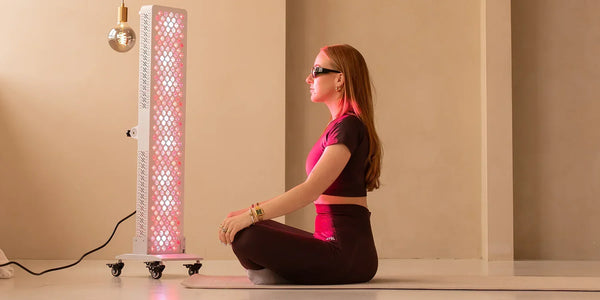
Are you considering applying light therapy for psoriasis at home? Discuss this with your GP or dermatologist first, especially if you are already using medication or ointments. If you want to try it as a supplement, follow these guidelines:
1. Distance
For skin conditions such as psoriasis, maintain a distance of 30 to 50 centimeters from the panel. The closer you are, the shorter the session can be.
2. Duration per session
A session of 1 to 2 minutes per skin area is often sufficient for the skin. If you treat multiple areas, you will usually end up at 10 to 20 minutes in total. More light is not automatically better.
3. Frequency
Most users apply light therapy 3 to 5 times per week. Build this up gradually and pay close attention to how your skin responds.
4. Practical tips
- Treat clean skin, without ointment or cream applied immediately beforehand (just as with medical light therapy in the hospital).
- Use eye protection when treating the face or scalp.
- Skip a day if you experience redness or irritation after a session.
- Are you combining your red light therapy with other treatments? Discuss this with your doctor, especially if you are using photosensitizing medication.
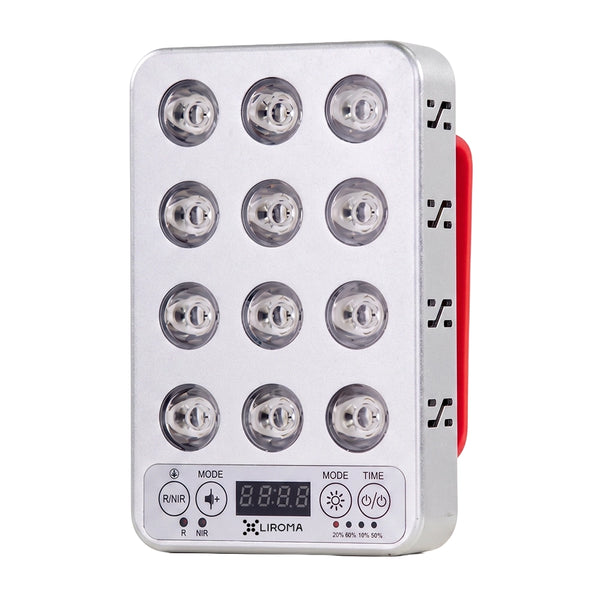
The panels people choose for skin conditions and what such a session looks like in practice are brought together on our page about red light therapy for psoriasis.

When should you see a dermatologist?
Red Light Therapy can, when used carefully, complement your routine, but it never replaces medical care. In any case, make an appointment with your GP or dermatologist if:
- the affected areas are large, spreading quickly, or not responding to your current treatment
- you also experience joint pain in addition to skin symptoms (possibly a sign of psoriatic arthritis)
- you are unsure whether your current medication or ointment can be combined with light therapy
- you are pregnant, breastfeeding, or using photosensitizing medication
- you have open wounds, blisters, or signs of infection on the skin
Frequently asked questions
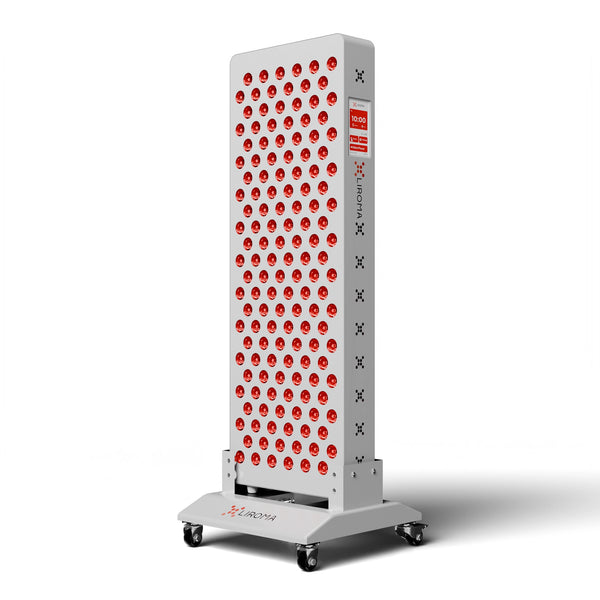
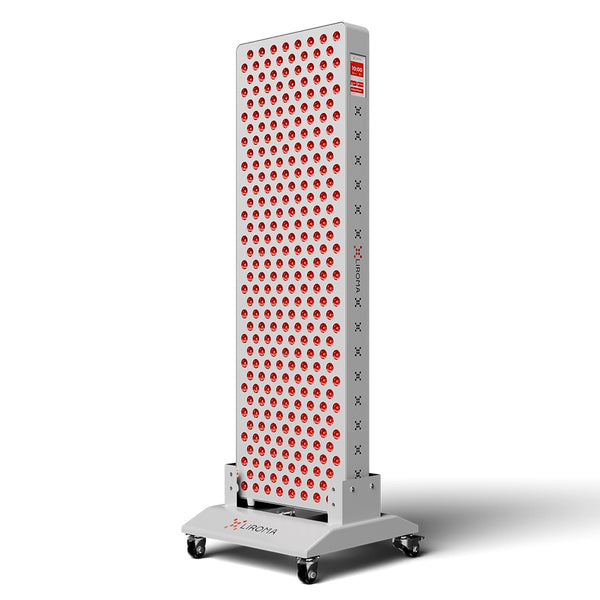
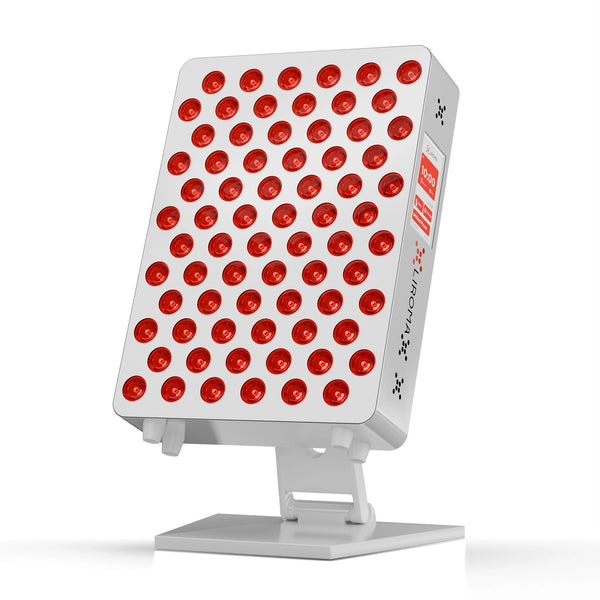
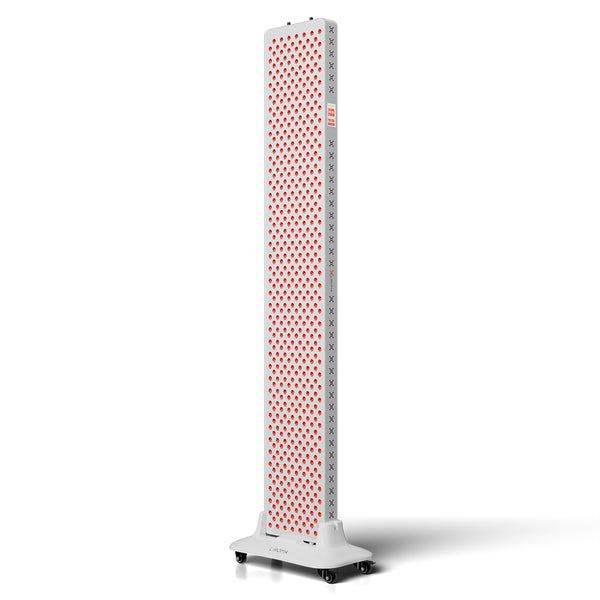
Want to try it yourself? Explore Liroma's range for the skin. You have 60 days to test it at home and see whether it suits you.
For the skin