Your first 30 days with red light therapy: week by week
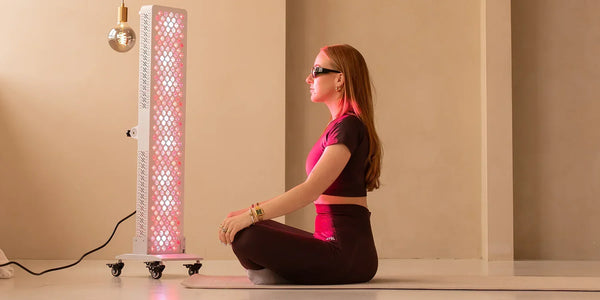
You have a panel at home, or you are considering getting one. And then comes the question we get most often: how do I start, and when will I notice anything? Below, you can read what to expect week by week during the first 30 days.
Below is a schedule for the first thirty days. No promise - everyone responds differently - but a realistic picture of what you can expect and where things usually go wrong.
60-day home trialFree shipping7 years of experience in light therapy
Please note: this information is based on scientific sources, customer experiences and our own knowledge of light therapy. It is not medical advice. If you take medication, have a medical condition or are unsure, talk to your doctor or a specialist first.
Before you begin: three things to record
This may sound excessive, but it is the difference between knowing whether it works and not knowing.
- Write down how you feel now. A score for your pain, how stiff you are in the morning, or what your skin looks like. In six weeks, you will no longer remember what it was like in week one.
- Choose one area to start with. Not your back and your knee and your face. One zone, so you know where any effect comes from.
- Set a fixed time. After showering, before bed, during the news. Red light therapy almost always fails because of inconsistency, not technique.

Week 1: build up, don't force it
What you do: four sessions spread throughout the week. Five to eight minutes per zone, at a distance of fifty centimeters. Bare skin.
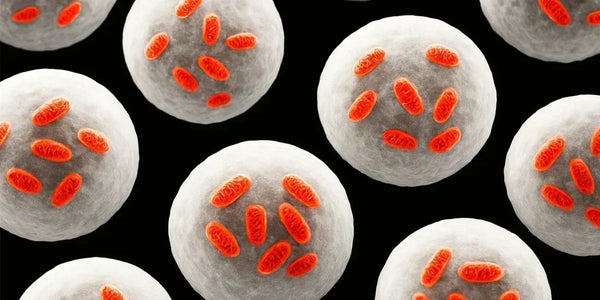
So start deliberately shorter and farther away than the maximum. There is a reason for that. The dose in red light therapy works in two phases: too little light does nothing, but too much actually inhibits the response. Michael Hamblin describes this principle in his overview of the mechanisms of action. More is therefore not better, especially not in the first week.
What you notice: probably nothing, except a slight warmth on your skin. Some people sleep noticeably better during the first week; that is a pleasant coincidence, not a measure of effectiveness.
Where things go wrong: sitting too close because it feels “more powerful.” See the article about distance.
Week 2: settling into the normal routine
What you do: four to five sessions. Eight to twelve minutes per area, at a distance of thirty to fifty centimeters. This is the routine you stick with for the rest of the time.
What you notice: with muscle complaints and stiffness, people sometimes report the first change this week. With skin and joints, almost never - it takes longer.
Where things go wrong: the first missed sessions. Skipping two days in week two is the most common start to giving up.
Week 3: the boring week
What you do: the same as in week two. Change nothing.
What you notice: this is the week when most people give up, because there is still too little happening to keep going and the novelty has worn off.
If you do one thing this week, let it be this: look back at what you wrote down on day one. Change happens slowly enough to go unnoticed.
Where things go wrong: jumping to conclusions. Three weeks is too early to judge.
Week 4: the first honest progress check

What you do: keep the same routine. If you want to add a second area, this is the time.
What you notice: this is where it gets interesting. For muscle recovery and stiffness, this is usually the point at which you can say something. For skin, it starts around weeks six to eight. The same applies to joints.
Put your note from day one next to it and assess based on that, not on how you feel. For more on the timeline, see how long it takes to see results.
Six questions everyone asks in month one
Can I do it every day?
For one zone, limit it to a maximum of once a day. If you treat different body parts, you may use it more than once a day — for example, your face in the morning and your knee in the evening. See how often to use red light therapy.
Do I need to wear glasses?
We recommend wearing protective glasses. Adjust the panel while standing beside it so you don't look directly into the light. Read more about this in red light for your eyes.
Can I keep my clothes on?
No. Light doesn't pass through clothing. The area you're treating must be exposed.
Does the panel get warm?
No. You may start sweating or feel warmth, but you won't feel heat on your skin. That's precisely the difference from an infrared sauna or heat lamp, where the heat is the active part.
Is it dangerous?
Not for most people, but there are exceptions and considerations. They're all covered in is light therapy dangerous and are there side effects.
What if I don't notice anything after a month?
That can mean two things. Either you're still in the ramp-up phase — for skin and joints, that's perfectly normal after four weeks. Or it doesn't work for you, and that happens. With us, you have sixty days to find that out at home.
The schedule at a glance
| Week | Frequency | Duration per zone | Distance |
|---|---|---|---|
| 1 | 4× | 5 to 8 min | 50 cm |
| 2 | 4 to 5× | 8 to 12 min | 30 to 50 cm |
| 3 | 4 to 5× | 8 to 12 min | 30 to 50 cm |
| 4 | 4 to 5× | 8 to 12 min | 30 to 50 cm |
Don't have a panel yet and want to know which size suits you: use the selection guide or compare the models.
Sources
- Hamblin, M. — Mechanisms and Mitochondrial Redox Signaling in Photobiomodulation
- ICNIRP — Infrared radiation
- Liroma — measured wavelengths and irradiance per panel
Red light therapy is intended to support the body's natural recovery and is not a medical device for curing conditions. Results vary from person to person.