Red Light Therapy for Lung (Post-)COVID: Can It Help?
Grocery shopping now costs you an afternoon on the couch to recover. Red Light Therapy may support recovery from long COVID, but it does not cure it. Light between 630 and 850 nanometers stimulates ATP production in your cells, reduces inflammation, and improves circulation, which may contribute to more energy, less pain, easier breathing, and less brain fog. You aim the panel at your chest, upper back, and optionally your head for 10 to 15 minutes per session, 3 to 5 times per week from a distance of 30 to 50 centimeters. Research on this is still in its early stages, so below you will read what the studies have shown so far and how one customer experiences it.
Are you still suffering from fatigue, breathing problems, or brain fog after a COVID-19 infection? You are not alone. It is estimated that 1 in 5 people experience long-term symptoms, even years after the virus. The search for natural ways to support recovery is a daily reality for many.
Red Light Therapy is receiving increasing attention as a complementary method for long COVID. In this article, you will learn what the therapy involves, how it works, and what its potential benefits are.

60-day home trialFree shipping7 years of experience in light therapy
Please note: this information is based on scientific sources, customer experiences and our own knowledge of light therapy. It is not medical advice. If you take medication, have a medical condition or are unsure, talk to your doctor or a specialist first.
What is long COVID (post-COVID)?
Long COVID, also known as post-COVID syndrome, refers to symptoms that persist or develop after an infection with the COVID-19 virus. This can occur even after a mild infection. The World Health Organization (WHO) defines long COVID as symptoms that last longer than 12 weeks and cannot be explained otherwise.
What makes long COVID so difficult is that it can affect many different bodily functions, from your breathing to your ability to concentrate. Unfortunately, there is still no single treatment that works for everyone.
What are the symptoms?
The symptoms of post-COVID vary widely. Below is an overview of the most common complaints:
- Severe fatigue, often even after light exertion
- Shortness of breath or breathlessness
- Muscle and joint pain
- Concentration problems (brain fog)
- Headaches
- Sleep problems
- Chest pain
- Loss of taste or smell
- Dizziness
- Heart palpitations
The nature and intensity of the symptoms can vary from person to person. Some are symptom-free after a few weeks, while others remain limited in their daily lives for months or even years.

How does Red Light Therapy work?
Red Light Therapy (or light therapy) uses red and near-infrared light with a wavelength between 630 and 850 nanometers. These wavelengths can penetrate deep into the skin without causing damage.
View all Red Light Therapy panels
What exactly happens in your body?
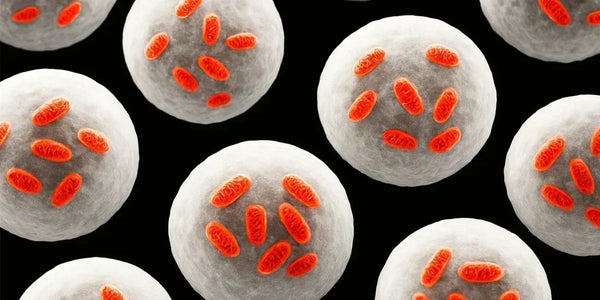
- The light particles are absorbed by your mitochondria, the energy factories of your cells
- This increases the production of ATP (adenosine triphosphate), the primary energy source for cellular processes
- The result: improved cell repair, reduced inflammation, and improved circulation
These effects can help your body recover better from stress or damage, such as that caused by an infection like COVID-19.

How can red light help with post-COVID symptoms?
Red light therapy is still being extensively researched, but initial findings are promising. Here are some ways this therapy may help relieve long COVID symptoms:
1. More energy with extreme fatigue
Fatigue is one of the most limiting symptoms of long COVID. Because red light therapy increases energy production in your cells, it may contribute to greater physical and mental energy. Some users notice that their overall energy levels gradually improve after several weeks of use.
2. Reduction of pain and inflammation
Many people experience persistent muscle or joint pain, often caused by inflammation. Red light is known for its anti-inflammatory properties, and can therefore help reduce pain and improve mobility.
3. Improved breathing
COVID-19 can cause lasting damage or inflammation in the lungs. By improving blood circulation and reducing inflammation in the chest area, Red Light Therapy may potentially contribute to easier breathing.
4. Clearer thinking and less brain fog
Red light can also affect the brain, especially when applied to the head or through so-called transcranial light therapy. By delivering more oxygen and energy to brain cells, some users experience a reduction in mental fog and improved focus.

How should I use red light lamps?
The great thing about light therapy is that it can easily be used at home. You do not need a clinic or doctor for this, although consulting one if in doubt is always advisable.
- Choose a good device: preferably a red light therapy panel or lamp with wavelengths between 660 nm (red) and 850 nm (near-infrared)
-
Direct the light at the right areas: for long COVID, these are primarily:
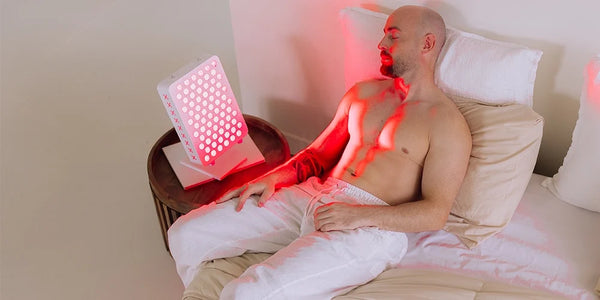
- Your chest (for breathing difficulties)
- The upper back
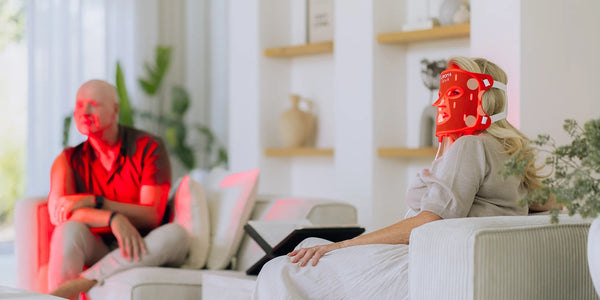
- The head, if necessary (for cognitive symptoms)
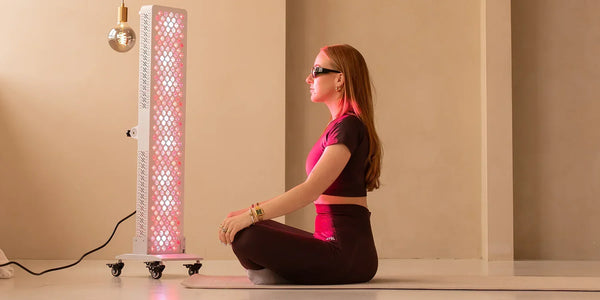
- Session duration: start with 10-15 minutes at a time, 3 to 5 times a week
- Consistency is important: most people only notice an effect after several weeks of regular use
- Use on bare skin, at a certain distance (30-50 cm from the device)

What does the science say? Research & studies
There is increasing scientific research into red light therapy for various conditions, such as inflammation, chronic fatigue, and brain-related symptoms.
Specific research into long COVID is still in its early stages, but the initial findings are promising:
1. Reducing lung inflammation and improving oxygen uptake
A pilot study in COVID-19 patients showed that Red Light Therapy may reduce inflammatory processes in the lungs while improving oxygen saturation. This may be particularly relevant for long COVID patients with persistent shortness of breath or breathing difficulties.
Source: https://pubmed.ncbi.nlm.nih.gov/33043132/
2. Relieving cognitive symptoms
In a small but promising study, participants with long COVID received transcranial red light therapy on the head. They reported improvements in memory, clarity of thought, and mental focus. The results point to a positive effect of light therapy on brain function in people with long-term symptoms.
Source: https://www.medrxiv.org/content/10.1101/2025.07.24.25331961v1.full
3. Supporting energy metabolism at the cellular level
Fatigue is one of the most common symptoms of long COVID. Research into photobiomodulation shows that red light stimulates the production of ATP, the energy source of your cells. More ATP means more energy, which may help alleviate extreme exhaustion.
Source: https://pubmed.ncbi.nlm.nih.gov/28748217/
4. Possible support for respiratory symptoms
According to a 2021 review study, red light therapy may help reduce inflammation in the lungs, improve oxygen uptake, and support the immune system in people with COVID-related symptoms. This makes it an interesting option for people with long COVID who continue to experience breathlessness and shortness of breath.
Source: https://pmc.ncbi.nlm.nih.gov/articles/PMC8233727/
5. New insights into light therapy as a complementary treatment
An extensive 2024 review discusses how light therapy, including red light, may serve as a complementary treatment for COVID-19 and long COVID. According to the authors, the therapy has anti-inflammatory effects, promotes cellular repair, and improves oxygen transport.
Source: https://pmc.ncbi.nlm.nih.gov/articles/PMC11022193/
Important: although the results are promising, more research is needed to draw definitive conclusions about its effectiveness specifically for long COVID.

Our customers' experiences
Michiel (40), ambulance nurse, recovering with red light therapy
My name is Michiel, I am 40 years old, and I work as an ambulance nurse in Maastricht. After being diagnosed with long COVID in June 2022, my life changed drastically. Whereas I had previously worked, exercised, and enjoyed family life to the fullest, I was suddenly confronted with extreme fatigue. Even a short walk could leave me feeling ill and exhausted the next day.
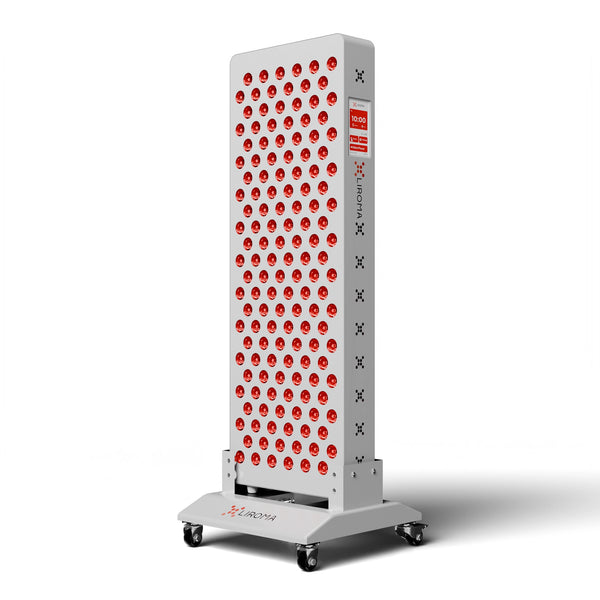
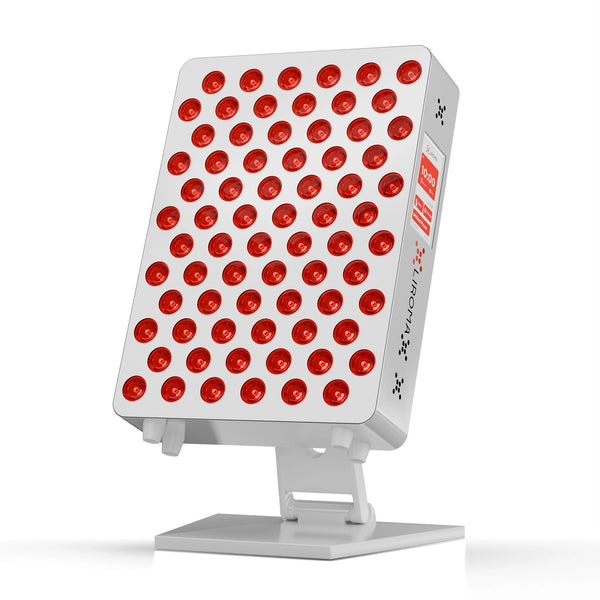
On the recommendation of people around me, I started using red light therapy. I use two devices: the Liroma PrimeFORCE RL60, a small, portable lamp that allows me to treat specific parts of my body very precisely, and the Liroma PrimeFORCE Elite Gen5, a more powerful panel that reaches larger areas of my body at once.
I like the RL60 because I can use it precisely where I need it, for example for sore muscles. The Elite Gen5 provides a slight warm sensation that helps me relax my muscles, especially after a long day. By applying the therapy every other day, I notice that my muscles recover faster and my overall energy level improves.
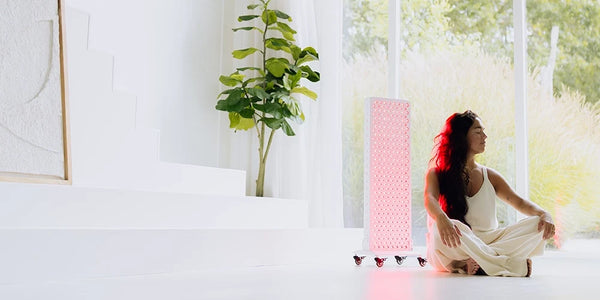
What is important to me is that I use the lamps in a quiet environment, without distractions. No music, no phone for a moment: just me, the light, and my breathing. That moment of calm helps not only physically, but mentally as well.
Although red light therapy does not cure long COVID, it does help me keep my symptoms under control. It gives me structure, relief, and the feeling that I am actively working on my recovery. Hopefully, my experience will inspire others to give this therapy a chance too.

Frequently asked questions
What is the difference between post-COVID and long COVID?
Although the terms sound different, they essentially refer to the same thing: persistent symptoms after a COVID-19 infection.
The term long COVID was initially used because the symptoms persist for a long time; ‘long’ means ‘lang’ in English. Later, the term post-COVID was also introduced, with ‘post’ coming from Latin and meaning ‘after’. This name emphasizes that the symptoms occur after the acute infection has already passed.
Is red light therapy safe?
Yes, in most cases, red light therapy is safe. It is non-invasive and does not damage the skin. However, it is always wise to consult your doctor if you take medication or have other health problems.
When will I notice the effects of red light therapy?
Many people notice improvements after 3 to 4 weeks of regular use. Others experience results sooner or later. Consistency is important.
Can I combine red light therapy with other treatments?
Yes, red light therapy is often used alongside other treatments such as physical therapy, breathing exercises, or supplements. However, always consult a healthcare professional.
Want to try it yourself? View Liroma's red light panels. You have 60 days to test at home whether it suits you.
View the panels