

Relatable?
Recovery takes time. Often too much time.
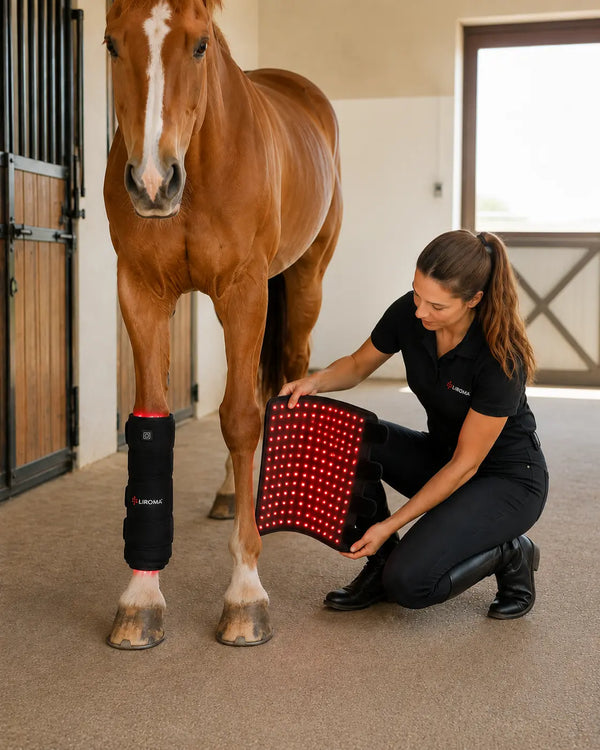
Tendons and joints
Weeks of moving at a snail’s pace, uncertainty about whether it’s healing properly, and tension as training starts to build back up again.
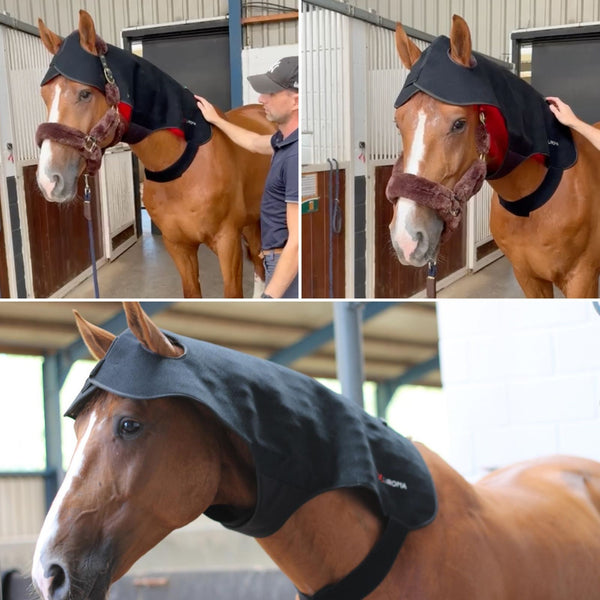
Stiff muscles and tension
Your horse does not move freely, is stiff in the neck or back, or recovers slowly after intense training or competition.
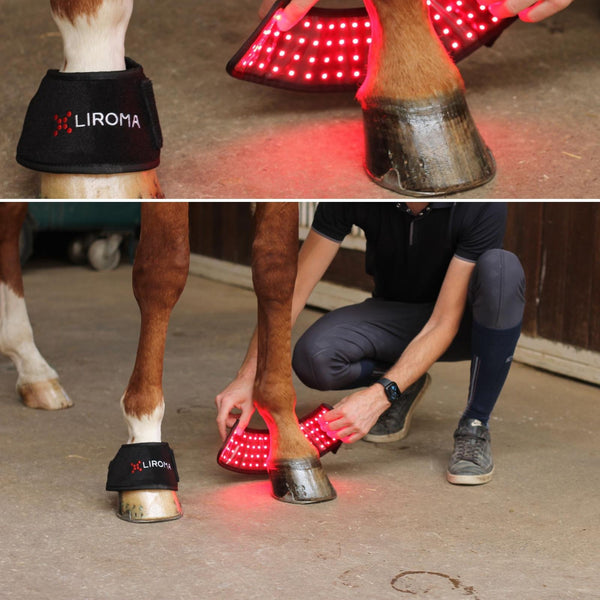
The hoof and coronary band
An area that is difficult to reach, even though circulation and comfort make all the difference in everyday care.
THE LIROMA EQUIN LINE
Three wraps, each for its own area
 Head and neck
The Poll
Ergonomic wrap around the ears and neck. For tension in the poll area, tight neck muscles, and post-workout recovery.
296 LEDs · 660 & 850 nm · 105 × 80 cm
€ 695
View The Poll Back, shoulder and legs
The Flex
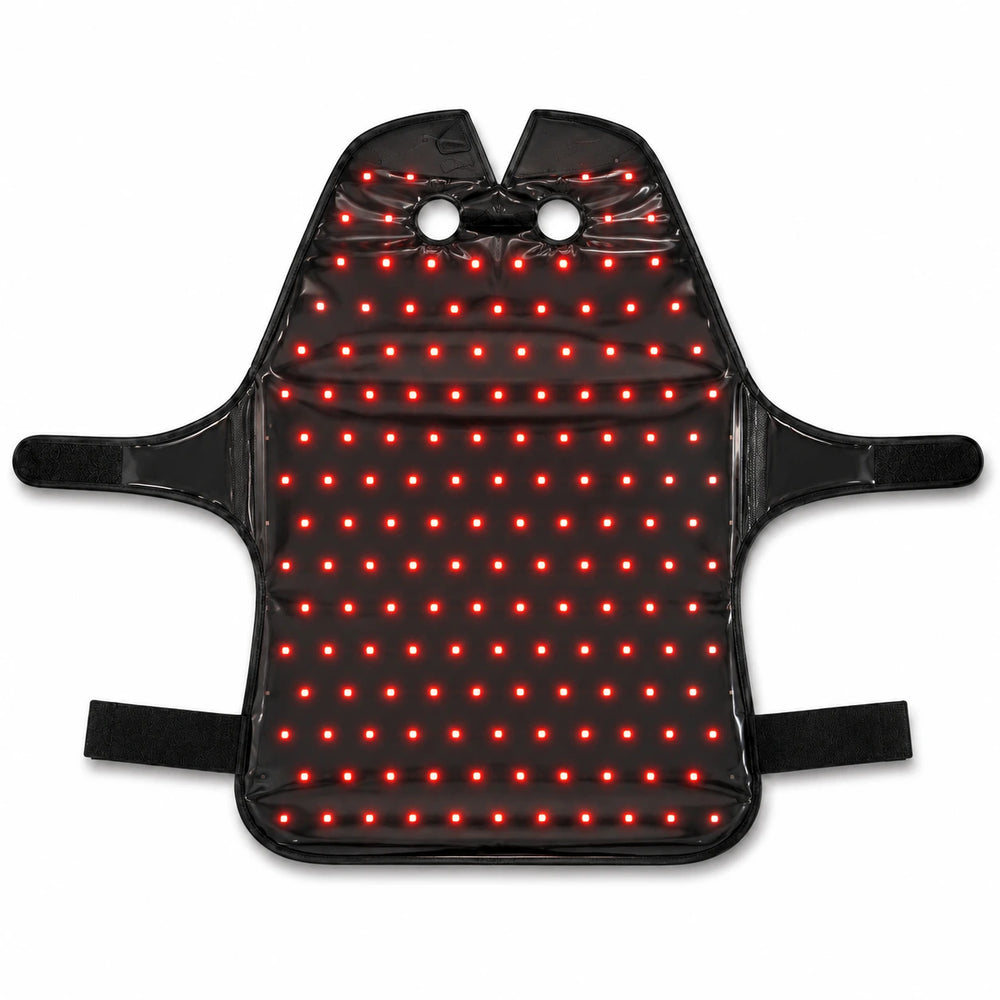
The versatile panel. Use it on a leg for tendons and joints, or on the back and shoulder for muscle recovery. Connect multiple Flex panels to create one larger treatment area.
600 LEDs · 660 & 850 nm · 45 × 41 cm
€ 495
View The Flex Hoof and coronet band
The Hoof
Specially shaped for the hoof. Supports circulation and comfort in the hardest-to-reach area.
80 LEDs · 660 & 850 nm · 44 × 10.5 cm
€ 175
View The Hoof60 days
Try it at home; if it’s not right, get your money back.
3 years
warranty
★ 4,7/5
Trustpilot (1,000+ reviews)
60 days
Satisfied customers
7 years
Red light therapy specialist
THE TECHNIQUE
What red light therapy does
Red light at 660 nm is absorbed by the skin and superficial tissues. Near-infrared light at 850 nm penetrates deeper, reaching muscles, tendons, ligaments, and joints.
Together, these two wavelengths support circulation, the natural recovery process, and the comfort of the treated area. Each Liroma Equin wrap combines them in a single session.
Red light therapy is a supportive form of therapy and does not replace diagnosis or treatment by a veterinarian.
THIS IS HOW YOU USE IT
In three steps in the stable
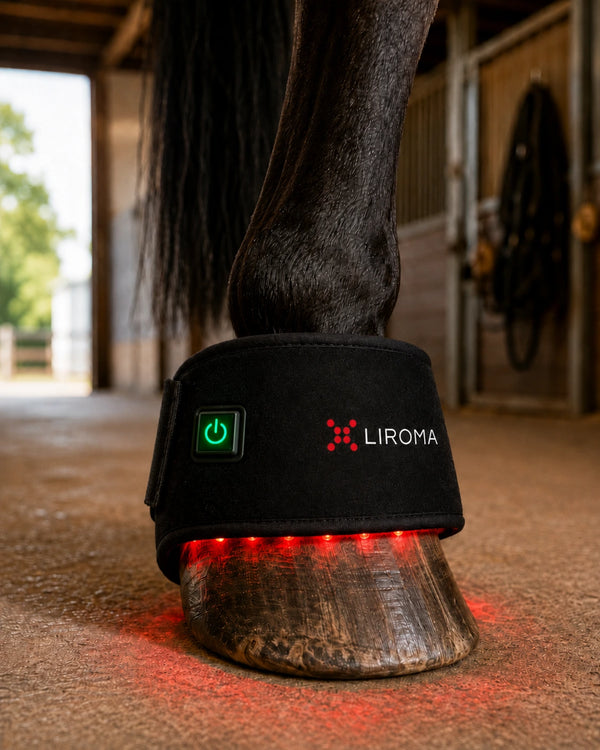
1. Wrap it up
Secure the wrap around a clean, dry treatment area using the built-in hook-and-loop fastener or the included straps. Your horse can remain standing in its stall; no tying or sedation is necessary.
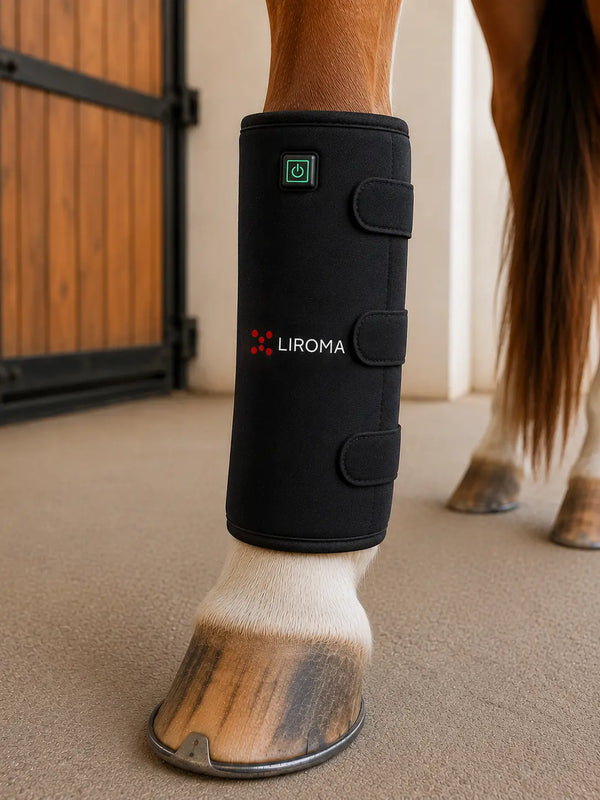
2. Choose the mode and start
Continuous light is the standard setting for daily care and recovery. Pulse mode is intended for horses that are sensitive or still need to get used to the treatment. The timer automatically switches off after fifteen minutes.
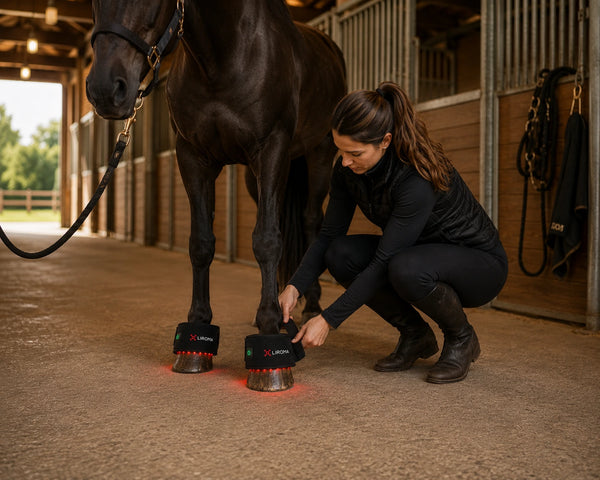
3. Repeat 3 to 5 times per week
The treatment time depends on the complaint and coat thickness: 6 to 15 minutes per area for back and muscle complaints, and 10 to 21 minutes for tendons and ligaments. The complete treatment schedule is provided in the accompanying manual.
Frequently Asked Questions
Everything you want to know
Does the light penetrate through the fur?
Partly. The protective layer over the LEDs and the coat reduce the light: by approximately 10 to 20 percent with a shaved or thin coat, and considerably more with a thick winter coat. That is why, with a thick coat, you use a longer treatment time per zone. For deeper structures such as tendons, ligaments, and joints, the manual recommends shaving the area or clearing it well.
How long does a session take, and how often do you provide treatment?
The timer switches off automatically after fifteen minutes. How long you treat each area depends on the condition and coat thickness: 2 to 6 minutes for skin problems, 6 to 15 minutes for back and muscle complaints, and 10 to 21 minutes for tendons and ligaments.
The recommended frequency is 3 to 5 times per week; for skin complaints, 4 to 6 times. Never treat one area for longer than 30 minutes in the same session.
What is the difference between continuous light and pulse mode?
Continuous light is the standard setting for daily care, relaxation, and recovery after exercise. Use pulse mode when your horse is sensitive to light therapy or still needs to get used to it. Pulse mode is not necessarily more effective: treatment time, frequency, and proper positioning matter more than the mode selected.
Is red light therapy safe for my horse?
The treatment is non-invasive and painless, and the wraps do not get hot — your horse may experience a mild sensation of warmth, which is normal. Stop the treatment as soon as your horse shows signs of discomfort or restlessness, or if the treated area becomes warm, red, or swollen. Never shine the LEDs into the eyes, and do not use the wrap while your horse is being ridden, lunged, or transported.
Does the wrap stay in place well?
The Poll and The Hoof close with built-in hook-and-loop fasteners; attach The Flex using the included 45 cm and 1.2 m straps. After each use, remove hair, sand, and mud from the hook-and-loop fastener—dirt noticeably reduces its grip.
Can I connect multiple Flex panels together?
Yes. That’s what The Flex was designed for: connect multiple panels together to create one larger treatment surface. Start with one panel and expand whenever you want.
Do the wraps need to be charged?
Yes, all wraps are wireless and charge via the included USB-C cable. The Hoof lasts up to 1.5 hours and takes 2.5 to 3 hours to charge, The Flex lasts up to 2 hours and takes 4 to 5 hours to charge, and The Poll lasts up to 2.5 hours and takes 7 to 8 hours to charge.
What is the difference between The Poll, The Flex, and The Hoof?
The Poll is designed for the head and neck area, and The Hoof for the hoof and coronary band. The Flex is the versatile panel for the back, shoulder, and legs, and is the only one that can be connected to another.
Can I combine this with the veterinarian or physical therapist?
Yes, red light therapy is often used alongside conventional treatment. Always consult your veterinarian first in cases of unexplained or severe lameness, acute tendon, ligament, or muscle injuries, laminitis, open or infected wounds, fever, or suspected fractures.
FOR PROFESSIONALS
Stable, practice, or clinic?
More and more stable owners, equine physiotherapists, and veterinarians are using red light therapy as a regular part of recovery and care. Contact us about our business terms, and we’ll help you determine which wraps best suit your practice.
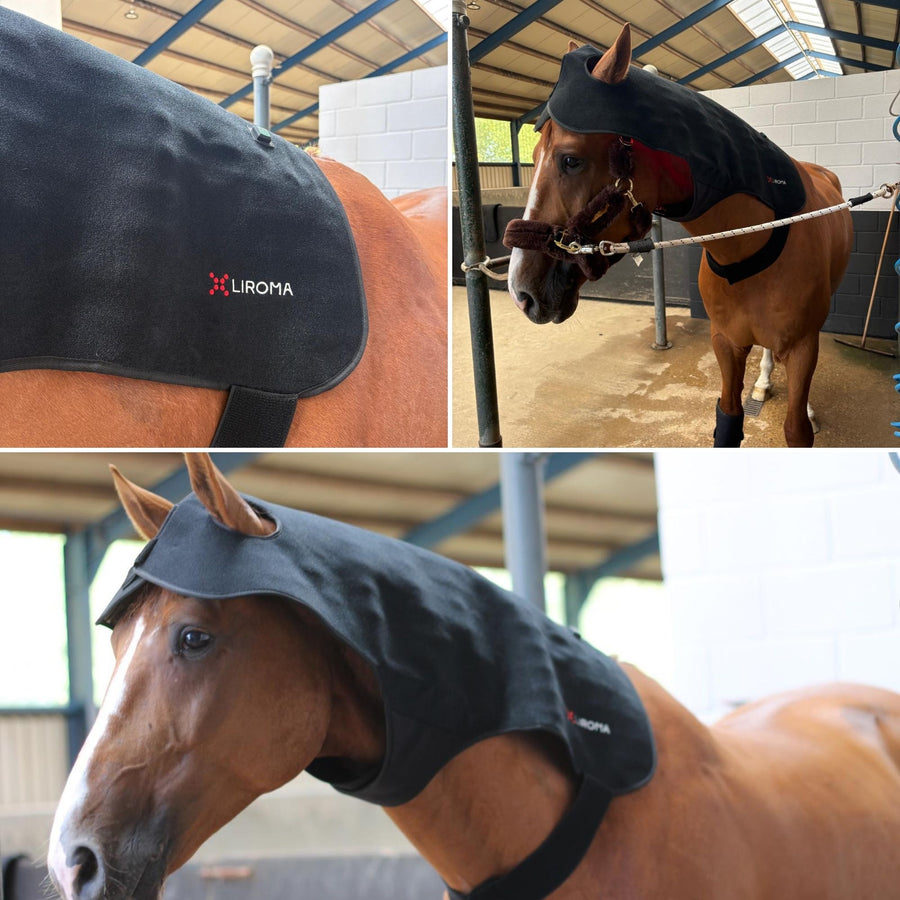
Choose the wrap that suits your horse
Not sure which wrap suits you best? Our customer service team will be happy to help you choose.
