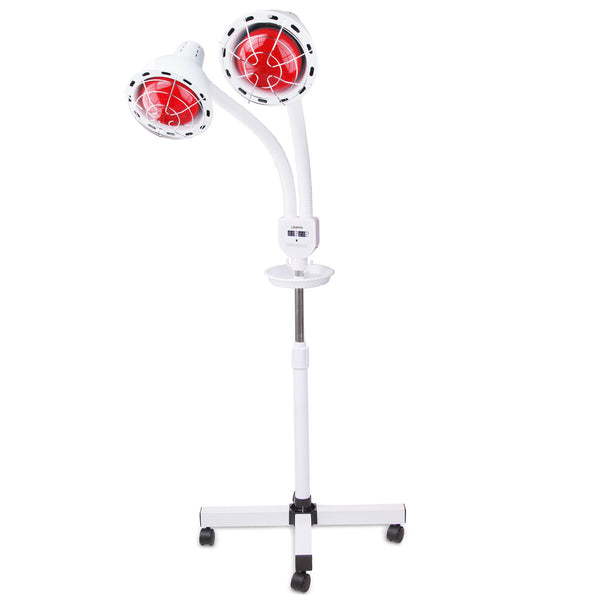
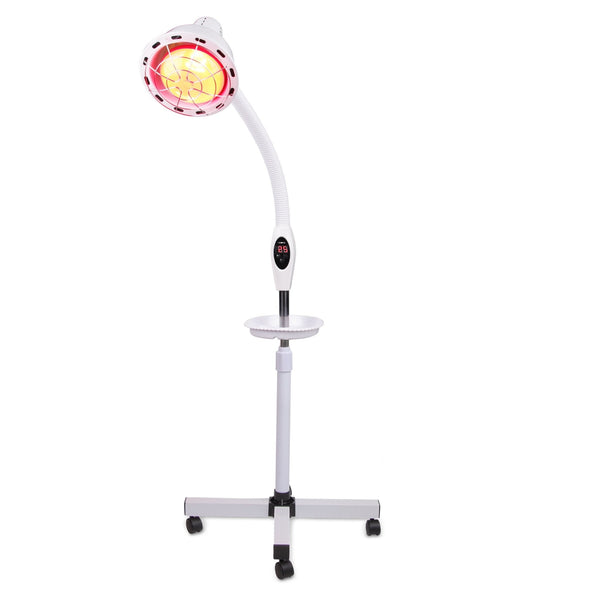
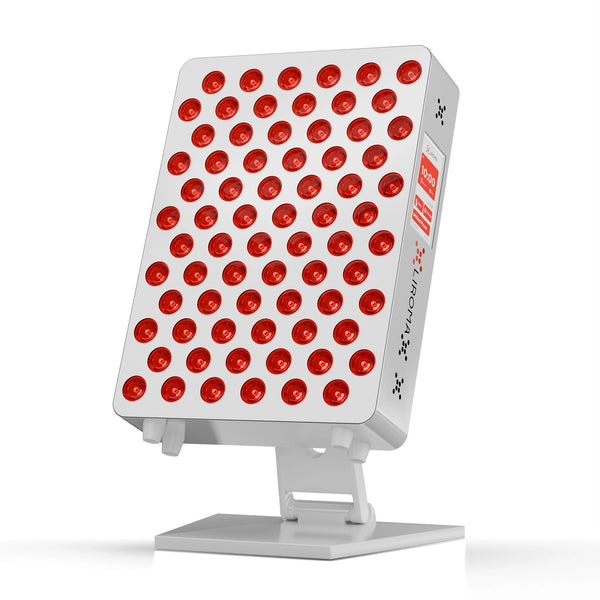
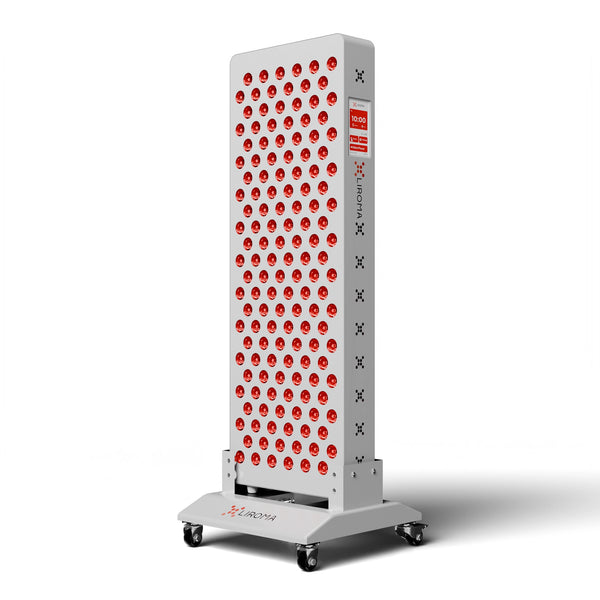
What is the difference between the LED infrared lamps and the Single-head Infrared lamp 506 and Double-head 507?
In the webshop, two lamps are displayed next to each other, and the difference is not immediately clear. The LED lamps operate at fixed wavelengths of 630, 660, 830, and 850 nanometers and let you choose between Red light, infrared, or both at the same time. The Infrared lamp Single 506 and Double head 507 emit a broader, unspecified range of 700 to 1000 nanometers and mainly provide heat because they use a filament instead of LED chips. If you want targeted therapy, a longer lifespan, and the option of Red light, choose LED; if you want soothing warmth, choose the Single or Double head. Below, you can read about the differences in wavelength, heat, quality, and durability.
60-day home trialFree shipping7 years of experience in light therapy
Please note: this information is based on scientific sources, customer experiences and our own knowledge of light therapy. It is not medical advice. If you take medication, have a medical condition or are unsure, talk to your doctor or a specialist first.
When it comes to choosing the right lamps for different health benefits, the range of available lamps can be quite confusing. In this article, we will help you by explaining the difference between our heat lamps, the Infrared lamp Single 506 and Double head 507, and the Red light therapy (LED) lamps.

Wavelength
It is important to know that infrared radiation occurs at different wavelengths. The wavelength used can affect how infrared works and its benefits. Choosing the right wavelength is important for the effectiveness of the therapy. Fortunately, many infrared lamps offer the option to switch between different wavelengths, allowing you to choose the one that best suits your specific needs. Good to know: Wavelength is expressed in nanometers (nm).
‘’The most important difference between infrared lamps that do not have a specific wavelength and LED infrared panels that are designed to emit specific wavelengths concerns the effectiveness of infrared therapy.’’
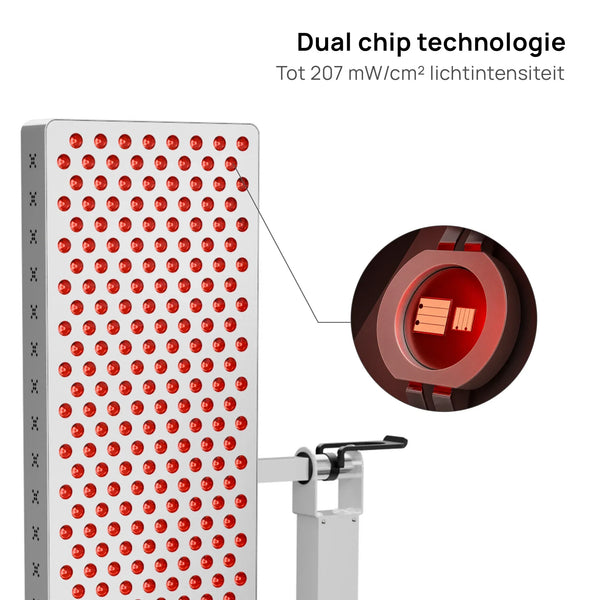
Our Liroma LED lamps are produced with specific wavelengths, namely 630nm, 660nm, 830nm, and 850nm. Much research has been conducted into these specific wavelengths, with excellent results. That is why our lamps are designed to feature these specific wavelengths based on scientific evidence.
Unlike our Red light therapy lamps with LED, Liroma's Single and Double head infrared lamps have a wavelength of 700 to 1000nm and are therefore not specified. As a result, treatment with these lamps is somewhat less effective and targeted. This does not mean, however, that our Infrared lamp Single 506 and Double head 507 are not effective.

Click below for several scientific articles on infrared therapy based on the following wavelengths: 630nm, 660nm – 830nm, 850nm
Study 1, Study 2, Study 3, Study 4
Red light & infrared
In the light spectrum, each color has a specific wavelength, which is expressed in nanometers. Red light has a wavelength of approximately 600 to 700 nm and is located in the visible part of the electromagnetic spectrum. We can therefore see this color with the naked eye.
Infrared light, on the other hand, has a longer wavelength than Red light and cannot be seen with the naked eye. The wavelength of infrared is 700 – 1000 nm. Within the light spectrum, infrared is located next to the Red light spectrum, outside the visible part of the spectrum.
As you can see, our LED lamps have specific wavelengths that fall within both the Red light spectrum and the infrared spectrum (NIR, or near-infrared). Both light spectra have different effects. With our LED lamps, you can choose to use one of the two options (Red light & infrared treatment) during your treatment, but using them simultaneously is also possible. Below is an overview to help you choose your ideal treatment more easily. The difference with the Single or Double head is that the Single or Double head is equipped only with infrared light and does not have a Red light option.


Heat
One ‘’benefit’’ of the Infrared lamp Single head and Double head is the soothing warmth emitted by the lamp. This benefit is naturally personal and differs from person to person. That is why we also call this lamp our ‘heat lamp’. LED chips are not designed to emit heat. The difference lies in the lamp used in the infrared heat lamp. Our heat lamps generate heat using a filament (halogen lamp). LED panels use chips to emit specific infrared radiation, with heat not being an added feature of the lamp. Heat, on the other hand, may be an added benefit for you! So, if you would like a lamp that becomes warm, we naturally recommend the Infrared lamp Single head or Double head.
Please note: Although infrared LED panels produce less heat than infrared heat lamps, they are still able to penetrate deeper tissues and work more precisely. This is because infrared LED panels can be programmed to emit infrared radiation at specific wavelengths that are most effective for infrared therapy.
Less heat can also be an advantage; this may be beneficial when the panel is placed close to sensitive parts of the body. The risk of burns or overheating the device is naturally lower.

Quality
You have undoubtedly noticed the price difference and perhaps wondered what accounts for it. The product's application is one of the reasons. This has already been discussed in detail above. In addition, LED infrared lamps have a longer lifespan than infrared heat lamps. This is because LEDs generally last longer than other lamps. The use of certain production materials should also be included in this list. ABS is used for the infrared heat lamps. The panels are made of stainless steel. The quality of the Red light therapy lamps with LED is therefore just a little better.
Durability
When we look at durability, there are several important differences between infrared heat lamps and infrared LED panels. In general, LED panels have several advantages over halogen lamps when it comes to durability. First, LEDs last much longer and need to be replaced less often. Second, LED panels consume less energy and are therefore more environmentally friendly. Third, LEDs do not contain harmful substances such as mercury and are easier to recycle. Finally, LED panels are more robust and less vulnerable to drops and impacts. All in all, infrared LED lamps are therefore more durable than infrared heat lamps (Single and Double head).

Want to try them yourself? Take your time comparing Liroma's lamps in the collection. You have 60 days to test at home which one suits you.
View all products