


- Reachable by phone for personal advice (+31 26 2022285)
- Tailored treatment plan adapted to your symptoms
- 3-year warranty on your device
- Try it for 60 days
- Free delivery tomorrow
- 41,000+ satisfied customers across Europe
- Supports muscle recovery, reduces inflammation, and relieves rheumatic symptoms
Delivery. If you order today, your order will be delivered tomorrow. Shipping is free within the Netherlands, Germany, France, and Belgium. For other EU countries, delivery takes 2 to 4 business days.
Returns. You have 60 days to try the panel at home, starting from the day of delivery. Not satisfied for any reason? Register your return via the following link. Return shipping costs €10 and are the customer’s responsibility. Your return shipment will be sent with insurance for this purpose. No additional fees will be charged, and we will not ask any questions. You will receive your refund within 10 business days after we receive the return shipment.
Warranty. You receive a 3-year full manufacturer’s warranty on the electronics and LEDs.

 Trustpilot 4.7/5 – 1000+ reviews
The latest generation of red light therapy panels

More than 41,000 people have gone before you!




A FAIR COMPARISON
Why Liroma and no other brand
You’re probably comparing several brands right now. Here you can see exactly where the difference lies, with figures you can verify yourself.
I compared several brands and chose Liroma because of its good reviews and clear measurement reports.
★★★★★ L. Visser · PrimeFORCE Advanced ✓ verified
| Liroma PrimeForce Gen5 | Other brands | |
|---|---|---|
| Wavelengths | 8 (630 to 1060 nm) | Usually 2 or 4 |
| LED chip | Dual chip — 2 chips per LED | Single chip |
| Radiation intensity | 207 mW/cm² at 15 cm | Often 100 to 150 mW/cm² |
| Measurement | Independently measured and published | Manufacturer’s statement |
| Certificates | Your own CE, EMC, and LVD certification | Supplier certificate |
| Treatment plan | Zone-specific, free of charge | None or a general schedule |
| Presets | 7 preset programs | No programs |
| Personal contact | Direct telephone contact | Email or contact form |
| Warranty | 3 years | 1–2 years |
| Trial period | 60 days | 14–30 days |
Not sure which panel fits?
Answer 4 questions and get personalized advice right away.
Start the selection guide →Free treatment plan?
Leave your number, and we’ll call you back.
THE PROOF
Actually measured
Irradiance determines how much light energy actually reaches your skin. It is the value that truly matters and is often overstated by brands.
207 mW/cm²
Measured at 15 cm · Sanpo SM206, calibrated July 2026
This is the actual measured value, not the theoretical value. We publish the full report so you can compare it with any other supplier.
View the full test report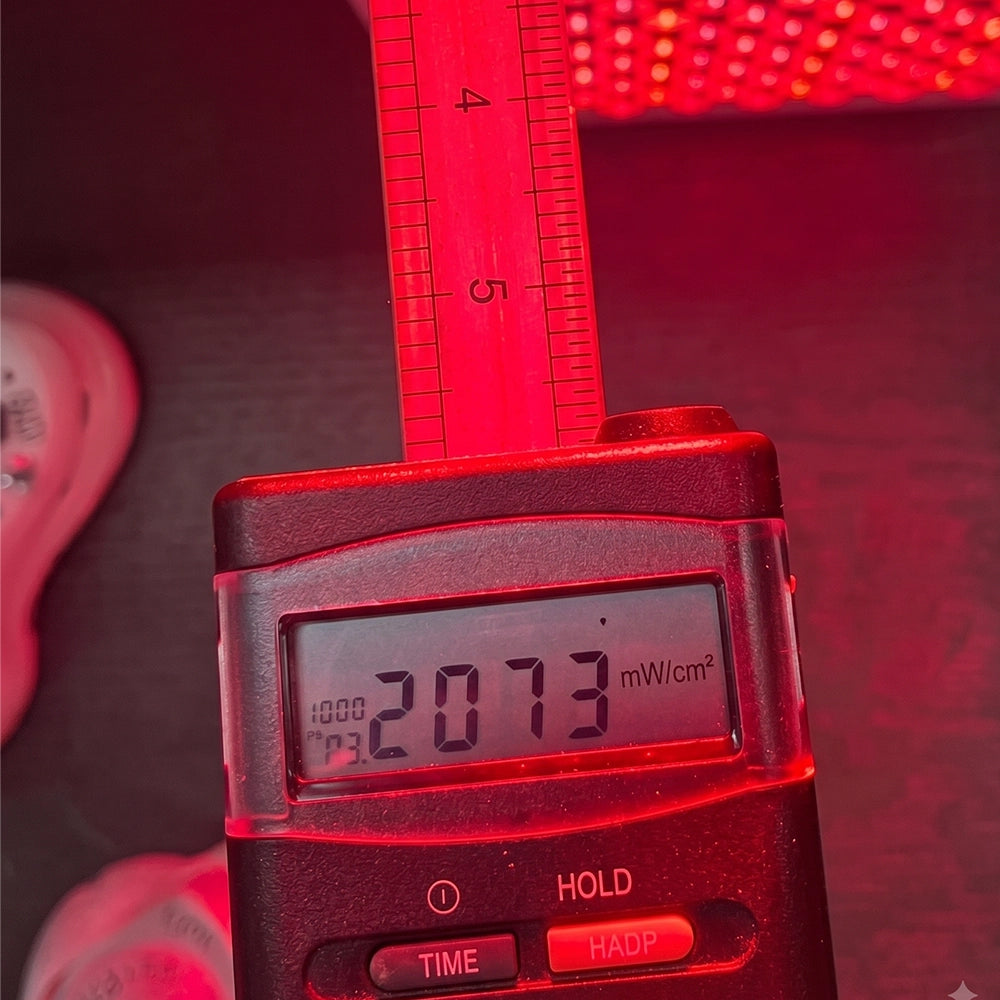
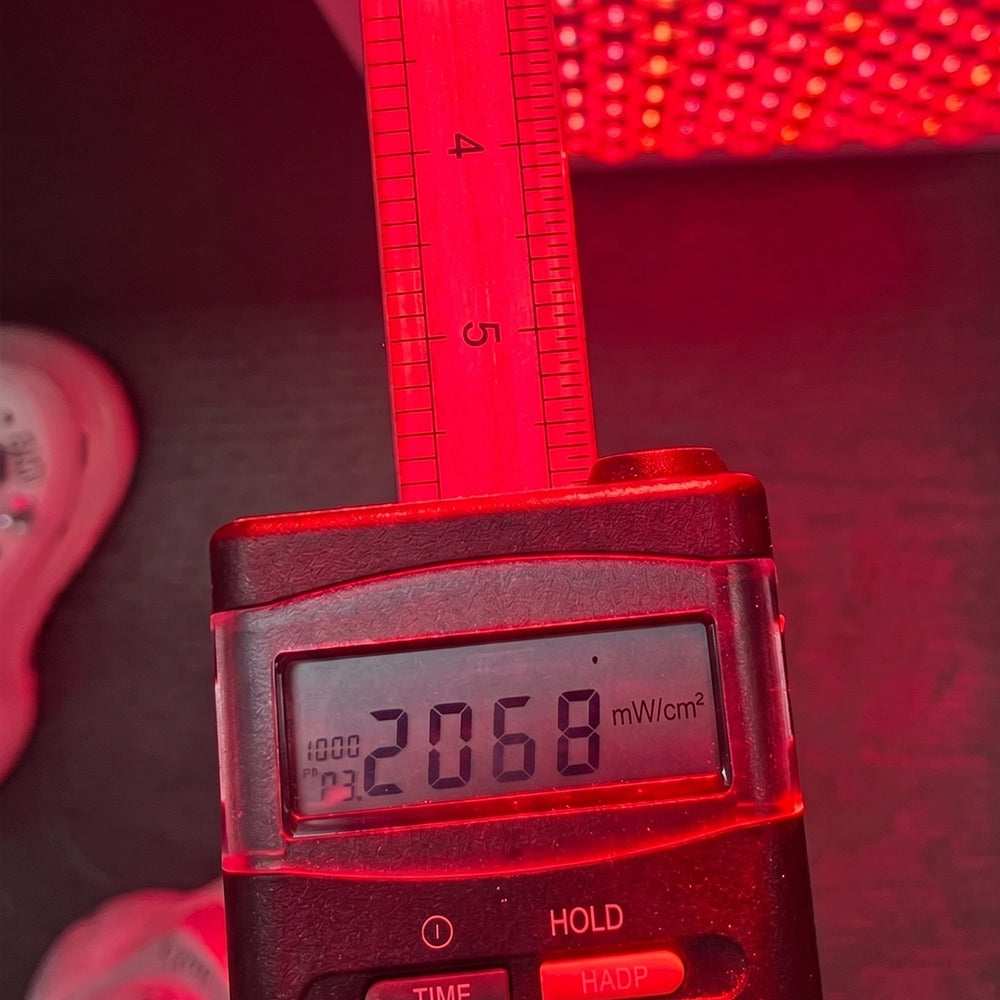
4 distances
MEASURED
15, 23, 30, and 40 cm · documented by model
0%
FLICKERING
Completely flicker-free, measured with an oscilloscope
8
GOLF LENGTHS
Spectrally verified, 630 to 1060 nm
100,000
EXPECTED LIFESPAN
At 5 sessions per week: over 60 years old
Choose a device that suits you
All panels offer the same health benefits, features, and technical specifications. The main difference lies in the number of LEDs, the size of the panel, and therefore the treatment area. Simply choose the model that suits the area you want to treat.

Portable

- 630-650-660
- 810-830-850nm

COMPACT
- 630-650-660-670nm
- 810-830-850nm
- 1060nm

ADVANCED

- 630-650-660-670nm
- 810-830-850nm
- 1060nm

ELITE

- 630-650-660-670nm
- 810-830-850nm
- 1060nm

MULTI

- 630-650-660-670nm
- 810-830-850nm
- 1060nm

ULTRA

- 630-650-660-670nm
- 810-830-850nm
- 1060nm
WHY IT WORKS
8 Wavelengths. Individually adjustable
Each wavelength reaches a different depth and serves a specific purpose. Together, they support the skin, muscles, joints, and deeper tissue in a single treatment.
630 nm
Red
Skin surface. Collagen production and wound healing.
650 nm
ROOD
Skin and connective tissue. Supports the skin barrier.
660 nm
DEEP RED
The most researched wavelength for skin rejuvenation.
meest onderzocht670 nm
DEEP RED
Penetrates deeper into the skin. Supports cellular energy and circulation.
810 nm
NEAR-INFRARED
Reaches deep-lying tissue. Supports the nervous system and helps reduce inflammation.
830 nm
NEAR-INFRARED
Supports reducing inflammation and the recovery of joints and muscles.
850 nm
NEAR-INFRARED
Penetrates deeply into the muscles. Widely used for sports and recovery.
meest onderzocht1060 nm
INFRARED
Very deep penetration. Supports cellular energy and tissue repair.

Skin and collagen
Visibly smoother and firmer skin. Supports collagen production and helps reduce fine lines.

Muscle recovery
Supports faster recovery after training. Reduces muscle soreness and supports muscle growth.

Energy and focus
Stimulates ATP production at the cellular level. More energy and better focus.

Pain and inflammation
Works deep into the tissue and helps reduce inflammation. Suitable for supporting relief from joint pain and rheumatic complaints.

Sleep quality
Evening sessions support melatonin regulation and relaxation for deeper, restorative sleep.

Professional at home
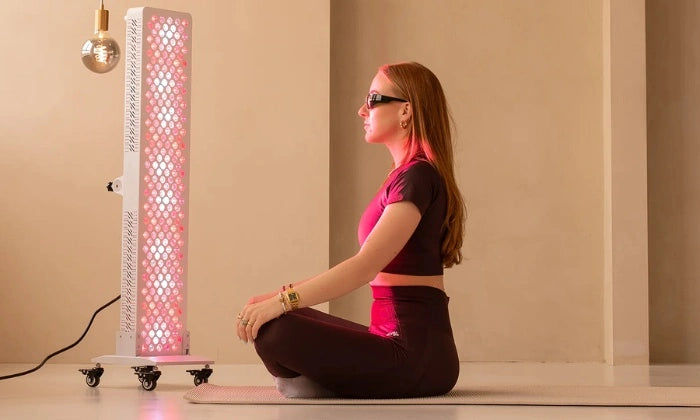
Professional red light therapy from home. Just 10 to 20 minutes per session, 3 to 5 times a week.
Frequently asked questions
Market leadership: Liroma is the market leader in the Netherlands and Belgium, which indicates reliability and quality. As customers increasingly choose Liroma, this points to a solid reputation and customer satisfaction.
Wide range: Liroma offers a wide range of products, from panels to LED masks and back bands. This ensures that you can choose the product that best suits your specific needs.
Innovation and technology: Liroma continues to improve and innovate its technology to increase the effectiveness of red light therapy. This ensures that you can benefit from the latest innovations in the field.
Ease of use and accessibility: Liroma's products are designed to be easy to use, whether you are treating yourself at home or in a professional environment.
Positive customer reviews: The growing number of positive reviews on platforms such as Trustpilot is a testament to customer satisfaction, which is an important sign of a reliable choice.
Customer service: At Liroma, customer service is our number one priority. We answer all your questions within 24 hours and are available daily by email or phone to help you.
Focus on quality: As the market leader, Liroma is often able to maintain the highest quality standards, which is crucial for the effectiveness of red light therapy.
Red Light Therapy, also known as photobiomodulation, is a non-invasive treatment that uses specific wavelengths of red and near-infrared light to improve cellular function. The light penetrates the skin and can stimulate the mitochondria in the cells, leading to improved cell repair, reduced inflammation and pain, and enhanced tissue healing.
Red light and near-infrared light (NIR) are both forms of light within the electromagnetic spectrum, but they differ in wavelength and how they are absorbed by the body.
1. Wavelength
Red light has a wavelength between 600 and 700 nanometers (nm), and it is visible to the human eye. It has a warmer, more visible appearance.
Near-infrared light has a longer wavelength of 700 nm to approximately 1,200 nm. This lies just outside the visible spectrum, making it invisible to the human eye, but it still has a great deal of energy and can penetrate deeper layers of the body.
2. Penetration into the body
Red light penetrates the skin to a depth of approximately 5 millimeters. It is primarily used to stimulate the superficial layers of the skin, such as improving skin texture, collagen production, and reducing inflammation.
Near-infrared light can penetrate more deeply, up to 2-3 centimeters into the body. It is often used for muscle recovery, joint pain, and improving blood circulation in deeper tissues.
3. Applications
Red light is often used for skincare and promoting healthy skin, for example by stimulating collagen production and reducing inflammation.
Near-infrared light is often used for deeper tissue recovery such as muscle and joint pain, promoting blood circulation, and speeding up recovery after physical exertion or injuries.
4. Effects on the body
Both types of light have therapeutic effects, such as promoting cell recovery and reducing inflammation. Near-infrared light, however, has a greater effect on deeper tissues and is often used for pain relief, while red light is more focused on skin improvement and superficial regeneration.
In general, they are often used together in combination therapies to benefit from both superficial skin improvement and deep tissue therapy.
A red light therapy panel with eight different wavelengths can offer a broader range of benefits, because each wavelength can penetrate different depths of the skin and stimulate specific cellular processes. This can result in a more versatile treatment that is more effective for different types of tissues and conditions.
The recommended frequency and duration of use may vary depending on the user's specific needs and goals. In general, it is recommended to use red light therapy 3–5 times per week, with sessions lasting 10–20 minutes at a distance of 30–50 cm
Within a few weeks of regular use of Liroma Red light therapy panels, you may begin to see benefits . Based on our internal surveys, many Liroma users report noticeable improvements in pain relief, reduced inflammation, and mobility within the first few days. 94% of our customers report pain relief within the first 4 weeks of regular use. Consistency is key, so using the therapy as recommended will help you achieve the best results .
Yes, Liroma Red Light Therapy is safe to use at home. Our devices are designed according to the highest safety standards, using medical-grade materials to ensure durability and non-toxicity. The therapy is non-invasive and extensively studied, with more than 3,000 clinical studies validating its safety and effectiveness. There are no known negative side effects, making it a safe option for a wide range of users. In addition, our devices are easy to use and come with clear instructions to ensure correct and safe application.
Our wonderful and friendly customer service team is available to assist you by phone or email. They will respond to your questions within 24 hours. We are proud that our team was rated 4.8/5 by our customers over the past year.
Yes, that is certainly possible. We provide personalized guidance for your current complaints and create a special treatment plan for them. Completely free of charge.

