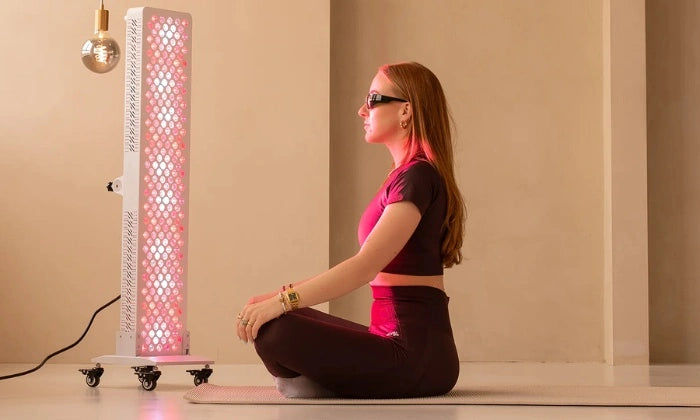
Delivery. If you order today, your order will be delivered tomorrow. Shipping is free within the Netherlands, Germany, France, and Belgium. For other EU countries, delivery takes 2 to 4 business days.
Returns. You have 60 days to try the panel at home, starting from the day of delivery. Not satisfied for any reason? Register your return via the following link. The return fee is €10 and is paid by the customer; this covers insured return shipping. No additional charges apply, and we ask no questions. You will receive your refund within 10 business days after we receive the return shipment.
Warranty. You receive a 3-year full manufacturer’s warranty on the electronics and LEDs.
Portable Prime (Red Light Therapy)
Trustpilot 4.7/5 – 1000+ reviews
Try it for 60 days
€272,72
€218,18
SEE IT IN ACTION
The latest generation of red light therapy panels
Dual-chip technology, eight wavelengths, red and near-infrared light
All panels offer the same health benefits, features, and technical specifications. The main difference lies in the number of LEDs, the size of the panel, and therefore the treatment area. Simply choose the model that suits the area you want to treat.
Each wavelength reaches a different depth and serves a specific purpose. Together, they support the skin, muscles, joints, and deeper tissue in a single treatment.
630 nm
Red
Skin surface. Collagen production and wound healing.
650 nm
RED
Skin and connective tissue. Supports the skin barrier.
660 nm
DEEP RED
The most researched wavelength for skin rejuvenation.
meest onderzocht
670 nm
DEEP RED
Penetrates deeper into the skin. Supports cellular energy and circulation.
810 nm
NEAR-INFRARED
Reaches deep-lying tissue. Supports the nervous system and helps reduce inflammation.
830 nm
NEAR-INFRARED
Supports reducing inflammation and the recovery of joints and muscles.
850 nm
NEAR-INFRARED
Penetrates deeply into the muscles. Widely used for sports and recovery.
meest onderzocht
1060 nm
INFRARED
Very deep penetration. Supports cellular energy and tissue repair.
Skin and collagen
Visibly smoother and firmer skin. Supports collagen production and helps reduce fine lines.
Muscle recovery
Supports faster recovery after training. Reduces muscle soreness and supports muscle growth.
Energy and focus
Stimulates ATP production at the cellular level. More energy and better focus.
Pain and inflammation
Works deep into the tissue and helps reduce inflammation. Suitable for supporting relief from joint pain and rheumatic complaints.
Sleep quality
Evening sessions support melatonin regulation and relaxation for deeper, restorative sleep.
Professional at home
Professional red light therapy from home. Just 10 to 20 minutes per session, 3 to 5 times a week.
Fantastisch product! Snel en makkelijk instelbaar en geleverd in een heel mooi stevig hoesje met laadkabel en handleiding waar ook de voordelen nog even overzichtelijk staan in vermeld. Een sterke aanrader voor bvb op vakantie of op langere verplaatsing. Of ook bvb makkelijk in bed te gebruiken
Geert B.5/5Verified
Rood licht paneel
Ik gebruik het lichtpaneel iedere morgen voor 10 minuten. 5 minuten op mijn borst en gezicht en 5 minuten aan de achterkant op mijn rug. Tijdens deze sessie luister ik naar een podcast en kan ik rustig wakker worden terwijl ik geniet van de warmte van het paneel. Na de sessie voel ik me gelijk een stuk energieker en helder. Het is voor mij een vast ochtendritueel geworden om energiek aan mijn dag te beginnen.
Niels D.5/5Verified
As a professional athlete, recovery is just as important as training, which is why I started using the Lieroma red light therapy panel almost two months ago. Since then, I have been using it nearly every day, and it has become an important part of my recovery routine.
One of the biggest improvements I have noticed is in my sleep quality. Both my smartwatch and smart ring consistently show better sleep metrics, and I genuinely feel more rested and recovered each morning. I have also noticed that I handle training loads better, with improved recovery between sessions and less overall fatigue.
I regularly use the joint recovery program, and it has helped reduce some of the aches and pains that naturally come from many years of high-level sport. My joints feel better, and I experience less discomfort during intense training periods.
In addition, I have been using the skin therapy program and have noticed visible improvements in my skin. Friends and family have even commented that my skin looks healthier and more refreshed.
The panel is easy to use, the quality is excellent, and the service from the Lieroma team has been great. Overall, I am very happy with the results and would recommend it to anyone looking to support recovery, sleep, and overall well-being.
Constantin P.5/5Verified
Fijne lamp
Een week geleden ontvangen. Lamp werkt goed, eenvoudig in te stellen en te bedienen. Nog te vroeg om iets te kunnen zeggen over de gezondheidsvoordelen.
Jenny S.4/5Verified
Huid word rustiger eindelijk. Ik twijfelde eerst tussen deze en een grotere, maar deze is voor mij nu goed. Misschien in de toekomst nog grotere
Linda P.5/5Verified
Prettige lamp
Ik heb gekozen voor de RL60 vanwege zijn verschillende functies voor vele toepassingen. Klein, compact, makkelijk overal neer te zetten (of te hangen) en zelfs mee te nemen.. Ik heb ‘m nu een week en ben nog van alles aan het uitproberen. Het baden in het rode licht geeft een aangenaam licht verwarmend gevoel, en of ik verder baat heb bij mijn spier/gewricht klachten is nog te vroeg om te zeggen, maar het lijkt de goede kant op te gaan.. Slapen is heerlijk na het rode licht, en ook wakker worden met het blauwe licht geeft energie.
Ik ben nog niet zo gecharmeerd van de pulse optie, maar dat ga ik zeker nog nader ontdekken/uitproberen.. Tot zover heel tevreden dus, misschien over een jaar nog eens een review schrijven dan heb ik er meer ervaring mee..
Trudi V.5/5Verified
Groot en krachtig paneel. Ideaal als je meer tegelijk wilt behandelen
Menno L.5/5Verified
Perfect tussenmodel
De RL300 is voor mij de ideale middenmaat. Groot genoeg voor rug, benen en schouders, maar nog steeds goed te plaatsen in huis. De bediening is duidelijk en het paneel voelt heel solide aan.
Bas M.5/5Verified
Alles TOP!
Ik heb een paneel PrimeFORCE RL300 (Rood Licht Therapie) besteld. De levering is snel en correct. Het artikel heel goed ingepakt.
Tot nu toe het werkt goed.
Ik heb een paar vragen (via whatsapp) gesteld over een planning voor behandeling en een hele snelle reactie ontvangen. Een hele fijne ondersteuning van de medewerker bij Liroma. ia een e-mail is mij alles uitgelegd en per zone een plan gemaakt.
Super fijn! BEDANKT!
Katarzyna T.5/5Verified
Krachtig
De RL600 is echt een indrukwekkend paneel. Ik gebruik hem voor full body sessies en merk dat het veel efficienter werkt dan kleinere modellen. Hij staat stevig, ziet er strak uit en voelt als een serieuze investering.
Emma V.5/5Verified
Upgrade
Hiervoor had ik een kleiner model, maar de RL240 geeft veel meer dekking. Vooral fijn dat ik grotere lichaamsdelen in een keer kan behandelen. Bedrijf ook zeer goed door geholpen
Thomas B.5/5Verified
Liroma RL120 BEST RED LED panel
great, very strong and effective LED panel, after a few days I can feel the difference, TOP quality and 3 year warranty, thank you Liroma for the best quality
Michal W.5/5Verified
Mooi formaat voor thuis
De RL240 is voor mij precies groot genoeg. Ik gebruik hem vooral voor mijn rug en benen na het sporten. Het paneel voelt degelijk aan en de sessies passen makkelijk in mijn dagelijkse routine.
Laura J.5/5Verified
Dagelijks voor mijn knie. Net begonnen resultaat moet nog blijken. Service was goed
Tom G.5/5Verified
Zeer handig
Heel blij met dit kleine paneel. Ik zet hem vaak op mijn bureau tijdens het werken en gebruik hem voor korte sessies. De bediening is simpel en de lichtopbrengst is sterker dan ik had verwacht.
Mark D.5/5Verified
Ik gebruik de Portable Prime nu vooral in de avond voor mijn gezicht en nek. Hij is makkelijk te verplaatsen, voelt stevig aan en neemt weinig ruimte in. Echt ideaal als je niet meteen een groot paneel nodig hebt.
Sophie V.5/5Verified
Blij met de resultaten
V. J.5/5Verified
Great service and great product. NIR infrared light is my best friend =P. Thanks Liroma
Dennis H.5/5Verified
Bij ons kan je dus nu ook rlt behandelingen nemen. mensen komen veel om te vragen wat het is. Super leuk om te zien dat roodlicht nu bekender word ik was er al jaren bekend mee en nu ook bij ons in de praktijk. Blij met de koop
Anoniem5/5Verified
Ik gebruik hem vooral voor me gezicht en nek. Mooi ding, doet wat het moet doen.
Soef5/5Verified
Rezension RL60
Leider später geliefert als angegeben, aber sehr guter Kunden-Support! Gerät wirkt sehr hochwertig. In der Bedienungsanleitung fehlt die Information, welche Batterie dafür nötig ist.
Barbara A.4/5Verified
Geweldige ATP lamp
Geeft een goeie verlichting voor mijn spieren.
J.e.a. H.5/5Verified
Alleen maar te spreken over liroma en de producten. Onderhand 2 producten aangeschaft en tevreden
Dani J.5/5Verified
Heel blij mee voelt professioneel aan en is makkelijk te bedienen. We gebruiken het boven onz bed. Zeer goed geadviseerd door Falko
Anoniem5/5Verified
Handig tafelmodel, zet 'm naast m'n laptop en 10 min klaar.
Bas5/5Verified
Dekt mooi schouders en rug, fijne warmte en ontspanning erna.
Mirte5/5Verified
Uitstekend lampje! Ik heb het gekocht omdat ik last heb van rosacea. En de lamp werkt! De huid kalmeert en wordt gladder. Mijn algehele gezondheid is ook veel beter, hoewel ik deze lamp pas een paar weken gebruik, om de dag gedurende 15 minuten. Ik raad aan!
Ik gebruik de RL60 vooral na het sporten. Helpt goed bij herstel van mijn spieren.
Mark V.5/5Verified
Past mooi aan de deur ik ben blij met het resultaat
Anoniem5/5Verified
Compact, past perfect op mijn bureau. Zeer blij met de lamp
Esther5/5Verified
Ik merk vooral dat mijn spieren sneller tot rust komen na een training. Erg tevreden
Anoniem5/5Verified
Na drie weken dagelijks gebruik zie ik duidelijk verschil. Mijn huid is strakker en mijn slaapkwaliteit is beter geworden. De bouwkwaliteit is top, maar het monteren van de standaard kostte wat tijd. Zodra het eenmaal hangt, is het ideaal.
Sofia S.5/5Verified
Al 2 jaar met ontstekingen in mijn schouder, na 1 week dagelijks achter de lamp (joint programma) kunnen sporten zonder belemmerd te worden door pijn.
Ik weet niet wát het doet of hoe het werkt, maar ik ga mijn partner met chronische rsi-arm er nu ook achter zetten.
Anoniem5/5Verified
Mooi apparaat. Keurig verpakt. Werkt uitstekend. Heb dit apparaat als tweede exemplaar gekocht om te combineren met eenzelfde apparaat dat ik enige tijd geleden heb gekocht.
Anoniem5/5Verified
Zeer tevreden
Dave R.5/5Verified
Patienten zijn tevreden
Ik ben fysiotherapeut en heb de RL240 gekocht voor gebruik in mijn praktijk. Inmiddels gebruik ik hem ook thuis omdat het resultaat indrukwekkend is. Patiënten geven aan dat hun gewrichtspijn sneller vermindert en de doorbloeding merkbaar toeneemt. Wat mij opvalt, is dat de lichtintensiteit gelijkmatig verdeeld is, en dat de combinatie van golflengtes echt diep werkt. Voor professioneel gebruik voldoet dit paneel ruimschoots aan de verwachtingen. Het voelt solide aan, ziet er strak uit en straalt kwaliteit uit.
Sanne V.5/5Verified
Goede bouwkwaliteit en simpel in te stellen, precies wat ik zocht. Ik was eerst wat sceptisch maar na een paar sessies merkte ik al verschil. Ook mijn partner gebruikt het nu geregeld en die is ook enthousiast. Ik combineer het met lichte rek-oefeningen, dat voelt nog beter. In mijn ervaring helpt het vooral bij stijfheid en herstel, dat had ik niet verwacht.
Tessa5/5Verified
Easy to use and effective for the skin.
Eva V.5/5Verified
Design is strak en stil, past goed in de slaapkamer.
Ruben5/5Verified
Goede bouwkwaliteit en simpel in te stellen, precies wat ik zocht.
Pieter V.5/5Verified
Als fanatiek krachtsporter was ik op zoek naar iets dat mijn herstel kon versnellen zonder supplementen of medicijnen. Na veel onderzoek ben ik uitgekomen bij de Liroma RL240. Na drie weken dagelijks gebruik van 10 tot 15 minuten merk ik een groot verschil.
Mijn spierpijn is minder heftig en ik voel me energieker, vooral na zware legdays. Ook mijn slaapkwaliteit is verbeterd, ik word uitgeruster wakker. De bouwkwaliteit van het paneel is uitstekend, voelt degelijk aan en het ophangsysteem is handig. De combinatie van rode en infrarode golflengtes maakt duidelijk verschil in dieptewerking. Echt een aanrader voor sporters die serieus met hun herstel bezig zijn.
Noah G.5/5Verified
Frequently asked questions
Market leadership: Liroma is the market leader in the Netherlands and Belgium, which indicates reliability and quality. If customers are increasingly choosing Liroma, this points to a solid reputation and customer satisfaction.
Wide range: Liroma offers a wide range of products, from panels to LED masks and back belts. This ensures that you can choose the product that best suits your specific needs.
Innovation and technology: Liroma continues to improve and innovate its technology to increase the effectiveness of red light therapy. This ensures that you can benefit from the latest innovations in the field.
Ease of use and accessibility: Liroma's products are designed to be easy to use, whether you are treating yourself at home or in a professional setting.
Positive customer reviews: The growing number of positive reviews on platforms such as Trustpilot is evidence of customer satisfaction, which is an important sign of a reliable choice.
Customer service: At Liroma, customer service is our number one priority. We answer all your questions within 24 hours and are available daily by email or phone to assist you.
Focus on quality: As a market leader, Liroma is often able to maintain the highest quality standards, which is crucial for the effectiveness of red light therapy.
Red Light Therapy, also known as photobiomodulation, is a non-invasive treatment that uses specific wavelengths of red and near-infrared light to improve cellular function. The light penetrates the skin and can stimulate the mitochondria in cells, leading to improved cell repair, reduced inflammation and pain, and enhanced tissue healing.
Red light and near-infrared light (NIR) are both forms of light within the electromagnetic spectrum, but they differ in wavelength and how they are absorbed by the body.
1. Wavelength
Red light has a wavelength between 600 and 700 nanometers (nm), and it is visible to the human eye. It has a warmer, more visible appearance.
Near-infrared light has a longer wavelength of 700 nm to approximately 1,200 nm. This lies just outside the visible spectrum, making it invisible to the human eye, but it still has a great deal of energy and can penetrate deeper layers of the body.
2. Penetration into the body
Red light penetrates the skin to a depth of approximately 5 millimeters. It is primarily used to stimulate the superficial layers of the skin, such as improving skin texture, collagen production, and reducing inflammation.
Near-infrared light can penetrate deeper, up to 2-3 centimeters into the body. It is often used for muscle recovery, joint pain, and improving blood circulation in deeper tissues.
3. Applications
Red light is often used for skin care and promoting healthy skin, for example by stimulating collagen production and reducing inflammation.
Near-infrared light is often used for deeper tissue recovery, such as muscle and joint pain, promoting blood circulation, and accelerating recovery after physical exertion or injuries.
4. Effects on the body
Both types of light have therapeutic effects, such as promoting cell recovery and reducing inflammation. Near-infrared light, however, has a greater effect on deeper tissues and is often used for pain relief, while red light is more focused on skin improvement and superficial regeneration.
In general, they are often used together in combination therapies to benefit from both superficial skin improvement and deep tissue therapy.
A red light therapy panel with eight different wavelengths can offer a broader range of benefits, as each wavelength can penetrate to different depths of the skin and stimulate specific cellular processes. This can result in a more versatile treatment that is more effective for different types of tissue and conditions.
The recommended frequency and duration of use may vary depending on the user’s specific needs and goals. In general, it is recommended to use red light therapy 3–5 times per week, with sessions lasting 10–20 minutes at a distance of 30–50 cm
Within a few weeks of regularly using Liroma Red light therapy panels, you may begin to see the benefits . Based on our internal surveys, many Liroma users report noticeable improvements in pain relief, reduced inflammation, and mobility within the first few days. 94% of our customers report pain relief within the first 4 weeks of regular use. Consistency is key, so using the therapy as recommended will help you achieve the best results .
Yes, Liroma Red Light Therapy is safe to use at home. Our devices are designed according to the highest safety standards, using medical-grade materials to ensure durability and non-toxicity. The therapy is non-invasive and extensively studied, with more than 3,000 clinical studies validating its safety and effectiveness. There are no known negative side effects, making it a safe option for a wide range of users. In addition, our devices are easy to use and come with clear instructions to ensure correct and safe application.
Our wonderful and friendly customer service team is available to assist you by phone or email. They will respond to your questions within 24 hours. We are proud that our team was rated 4.8/5 by our customers over the past year.
Yes, that is certainly possible. We provide personalized guidance for your current complaints and create a special treatment plan for them. Completely free of charge.